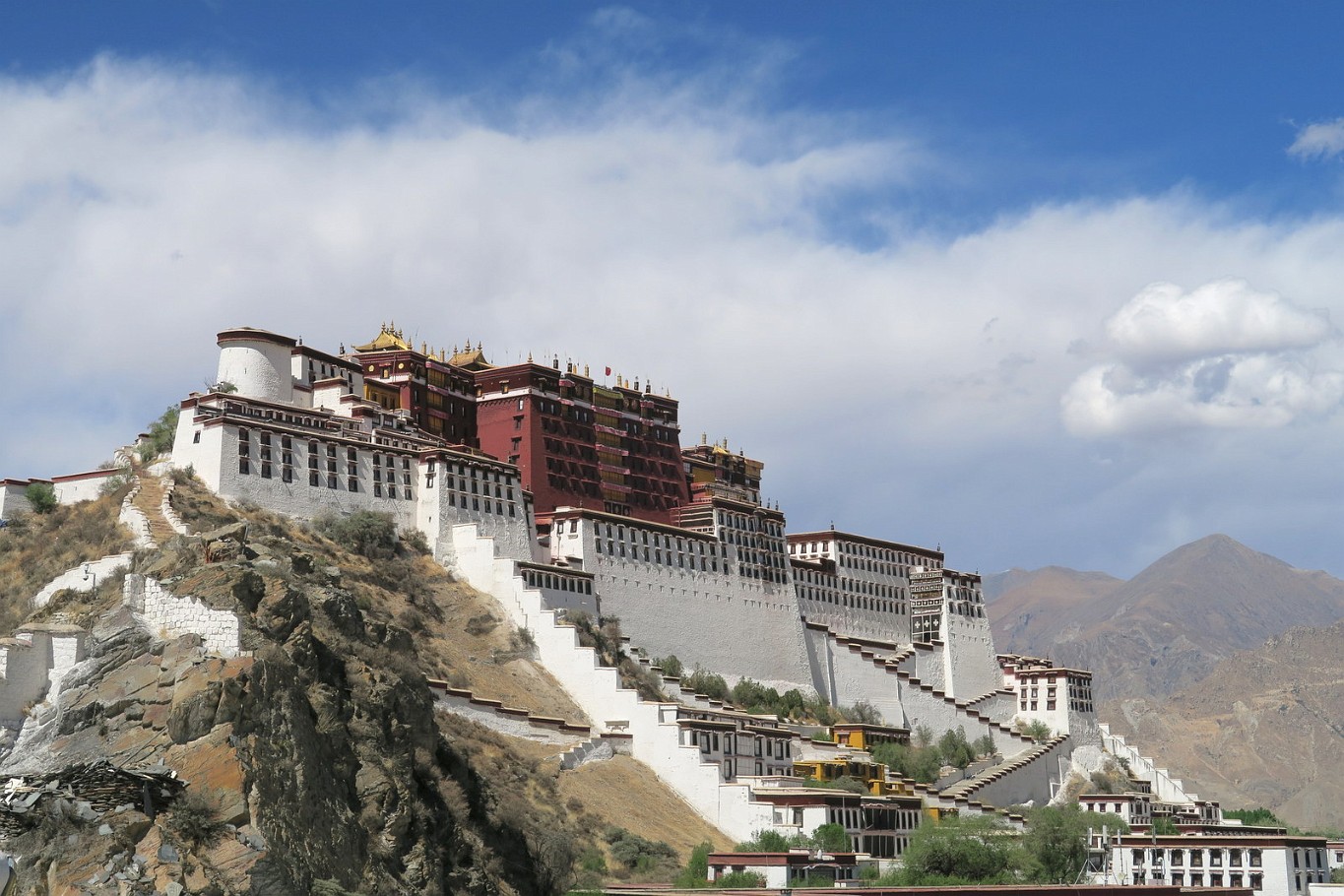
 1 Lhasa - Potala Palace |
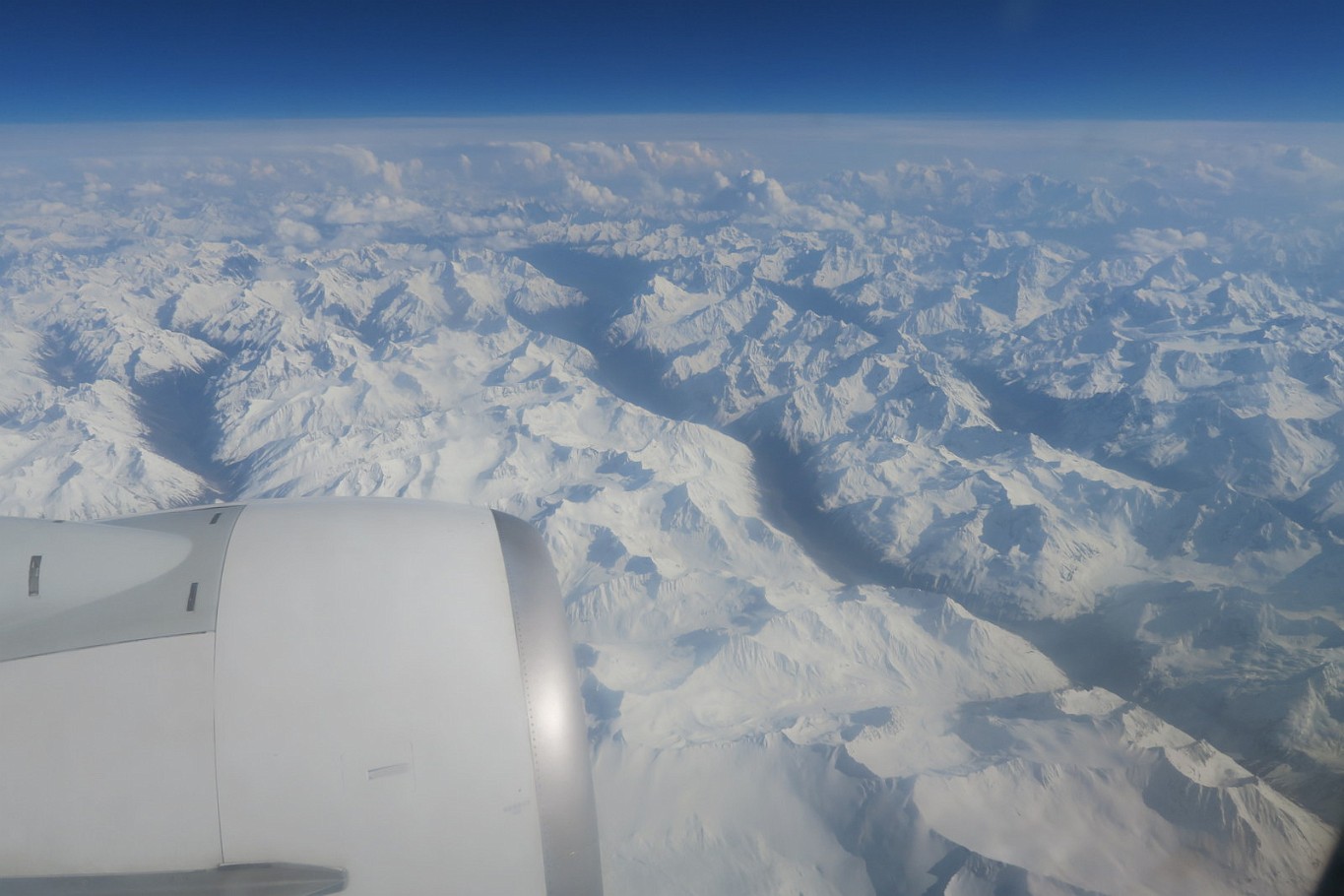 2 Approaching Tibet Despite the somewhat clouded sky, the endless mountainranges on the flight from Kunming to Lhasa were incredible - Swiss alps are so tiny compared to this! |
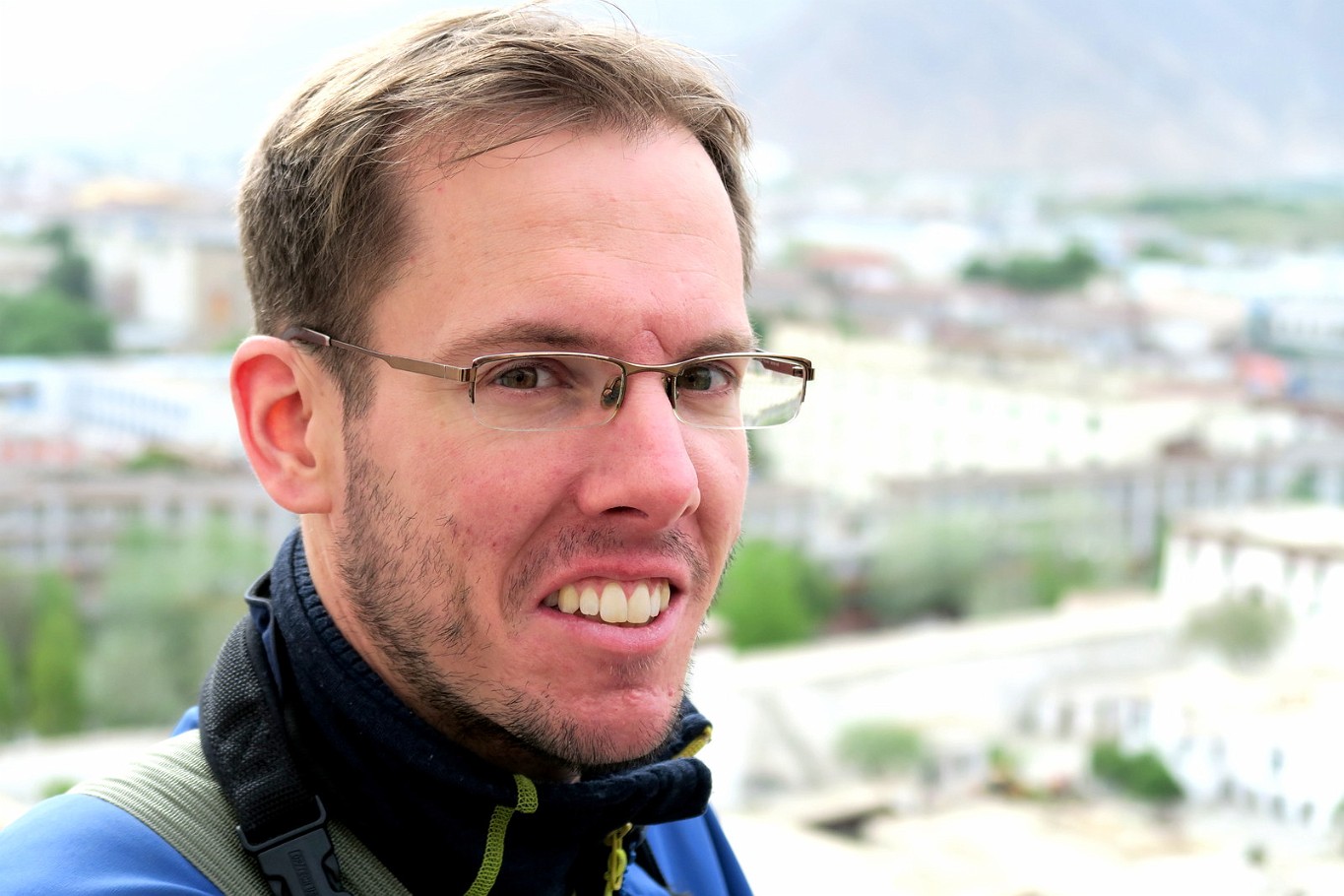 3 Travel Buddy I met Peter in the Mandarin base class in Zurich - we found out that we have similar plans about studying chinese in China and travelling, so we met up in the language school in Kunming and are now tavelling through Tibet and along the Silk Road together. |
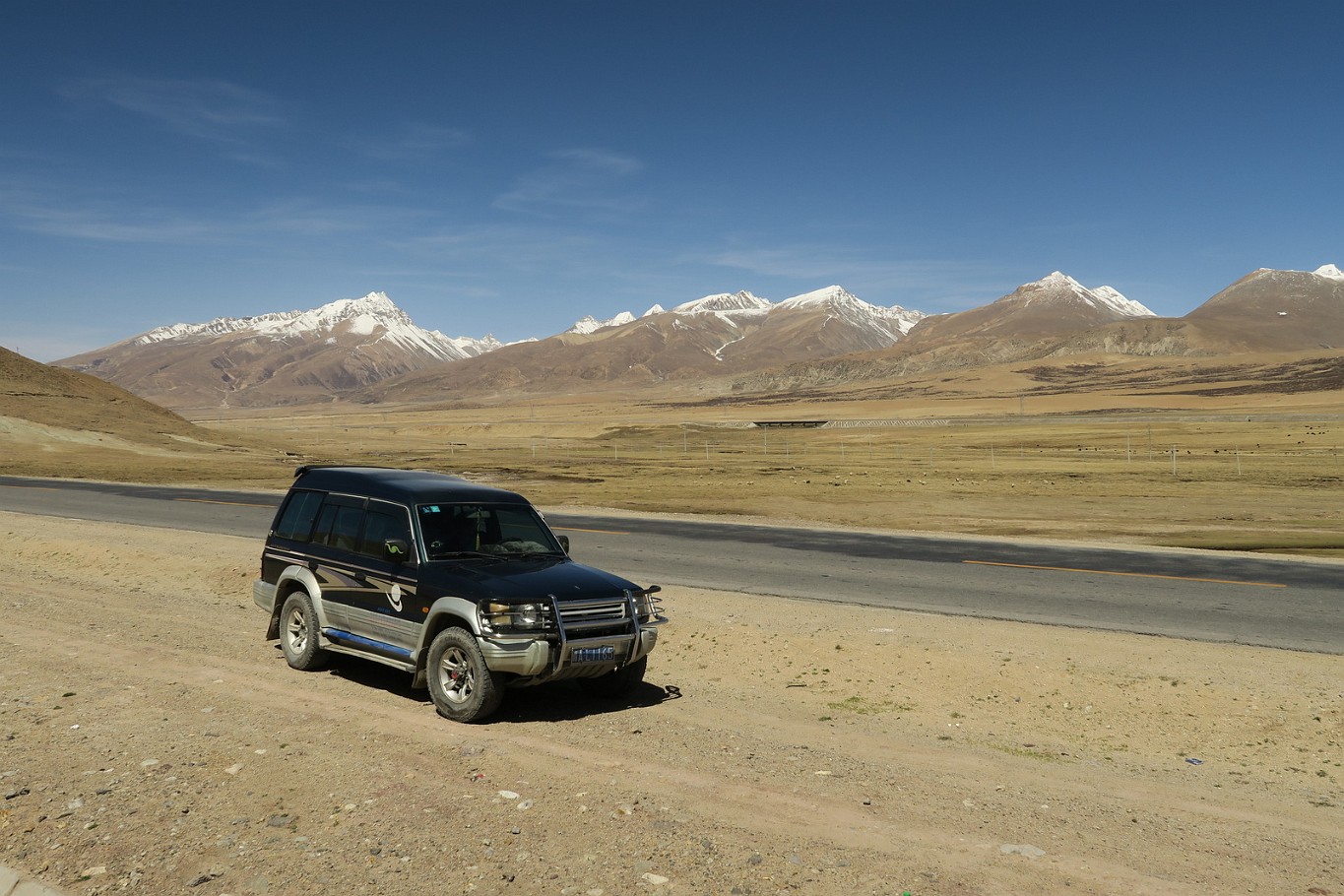 4 On the Way to Namtso Lake First impressions of the Tibetan landscape, on the way from Lhasa to Namtso Lake. |
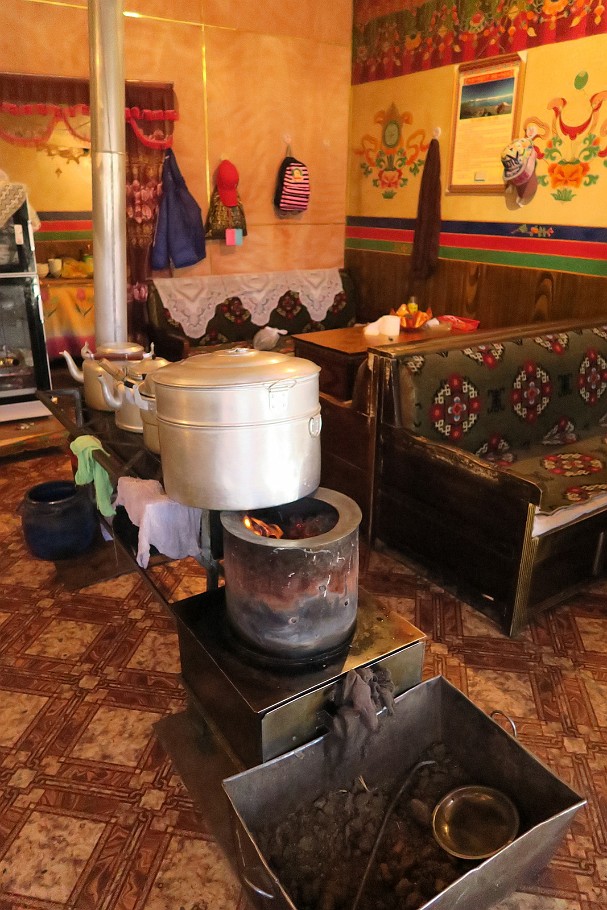 5 Tibetan Living Room This is the typical setting in any Tibetan living room (and, as here, restaurant). As the buildings are poorly isolated and there is no heating system, the oven is located in the center of the room and daily life takes place around it. Because in the high altitudes, only few trees are growing and no wood is available for heating, the ovens are operated with dried yak droppings (which are readily available :-) |
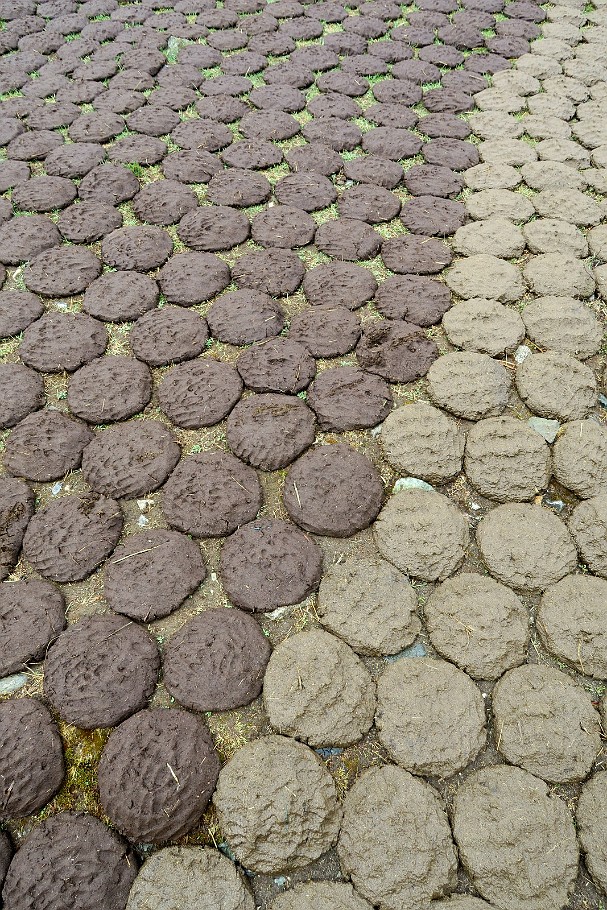 6 Yak Shit Yak droppings laid out for drying. Why there are two different colors, I was not able to find out, but it certainly makes the setting more photogenic... |
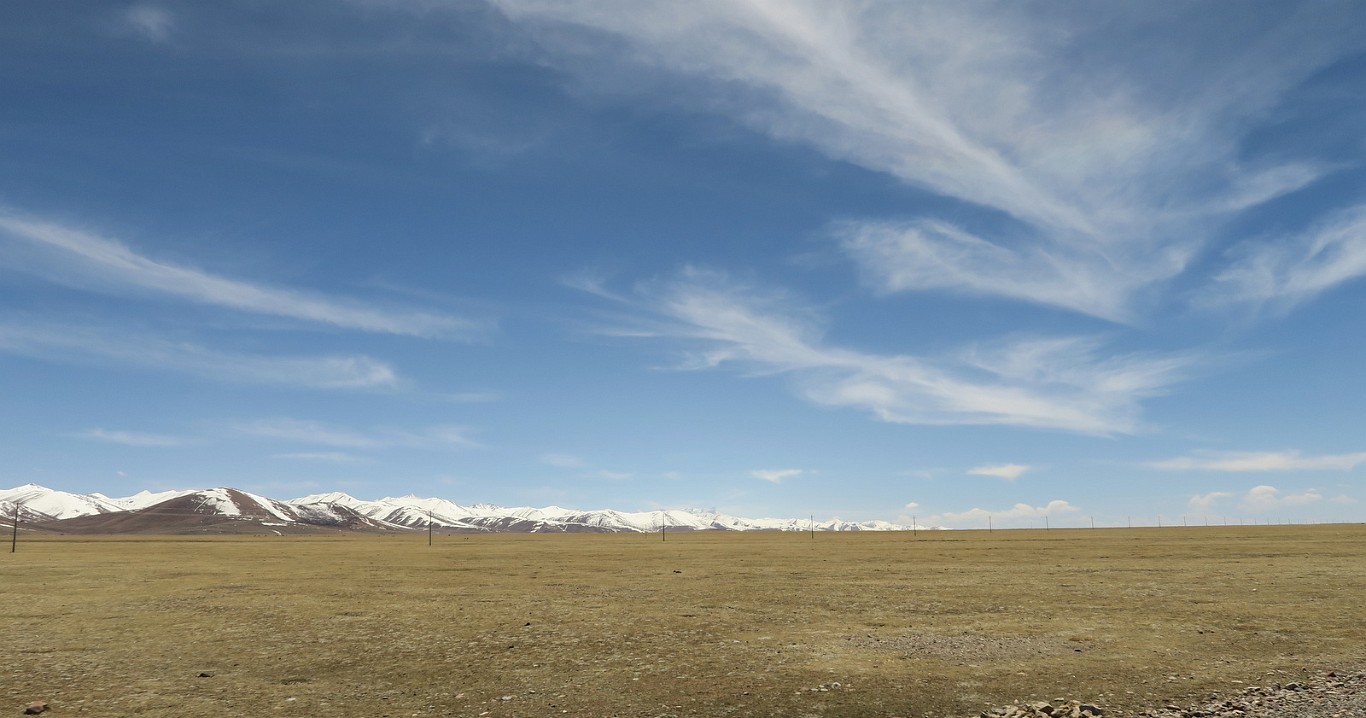 7 Seemingly Endless Vastness on the Namtso Altiplano |
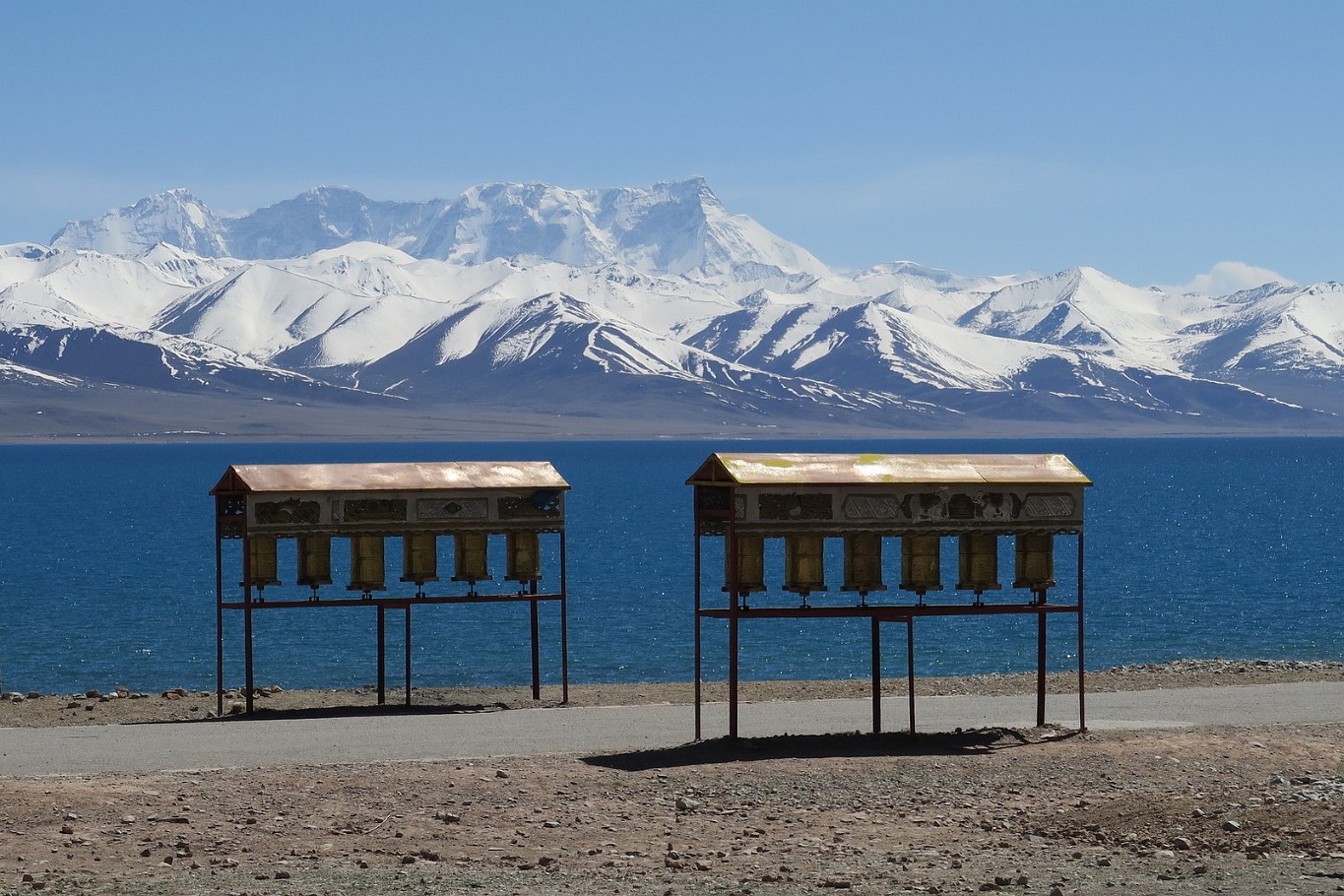 8 Prayer Wheels at Namtso Lake |
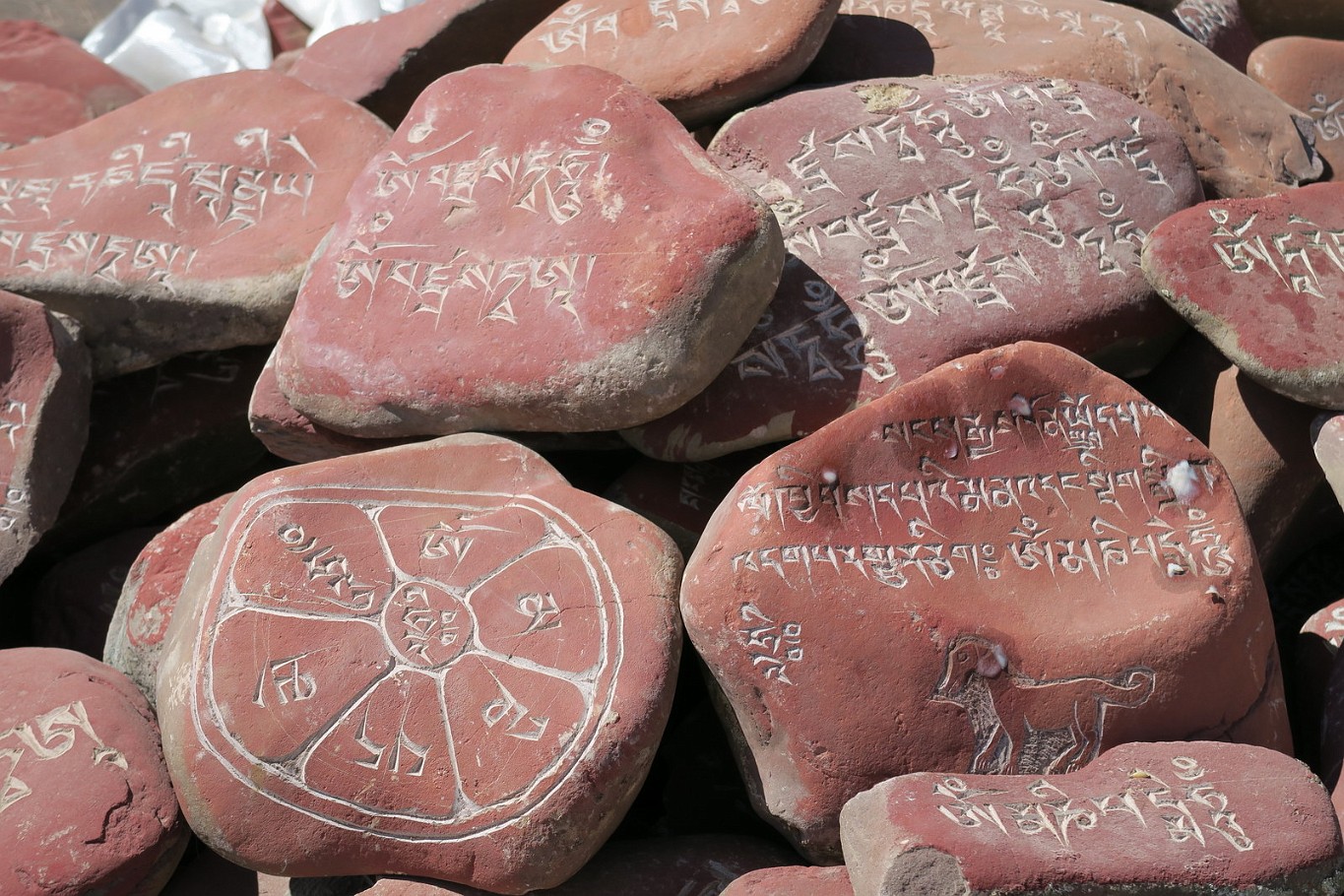 9 Prayer Stones These stones with engraved mantras are stacked around holy places, with the idea that the mantras (prayers) are caught by the wind and carried away. |
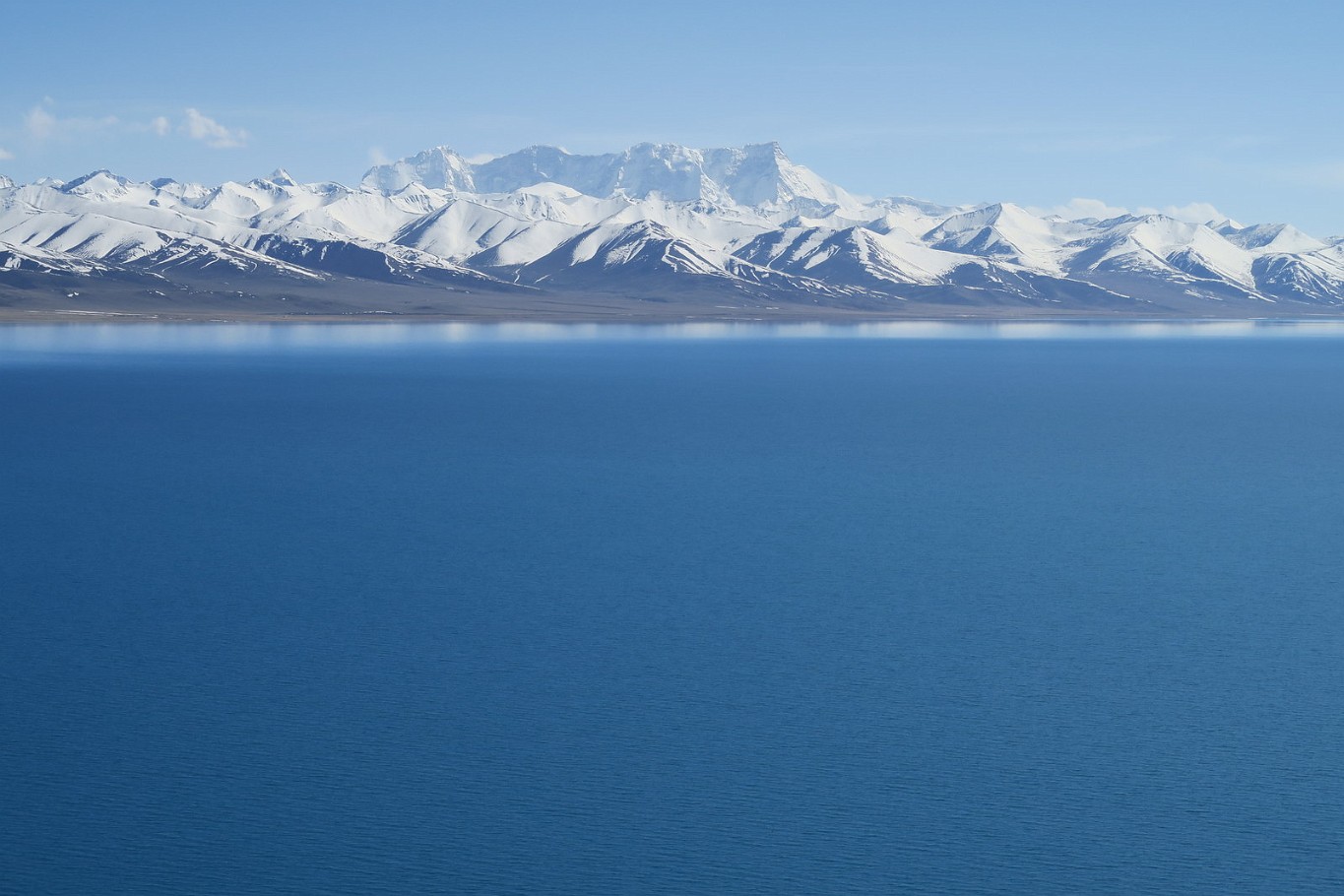 10 Namtso Lake Deep blue Namtso Lake, the highest and one of the holiest lakes in Tibet, backed with snowy mountains, offers fabulous views and plenty of photo opportunities. |
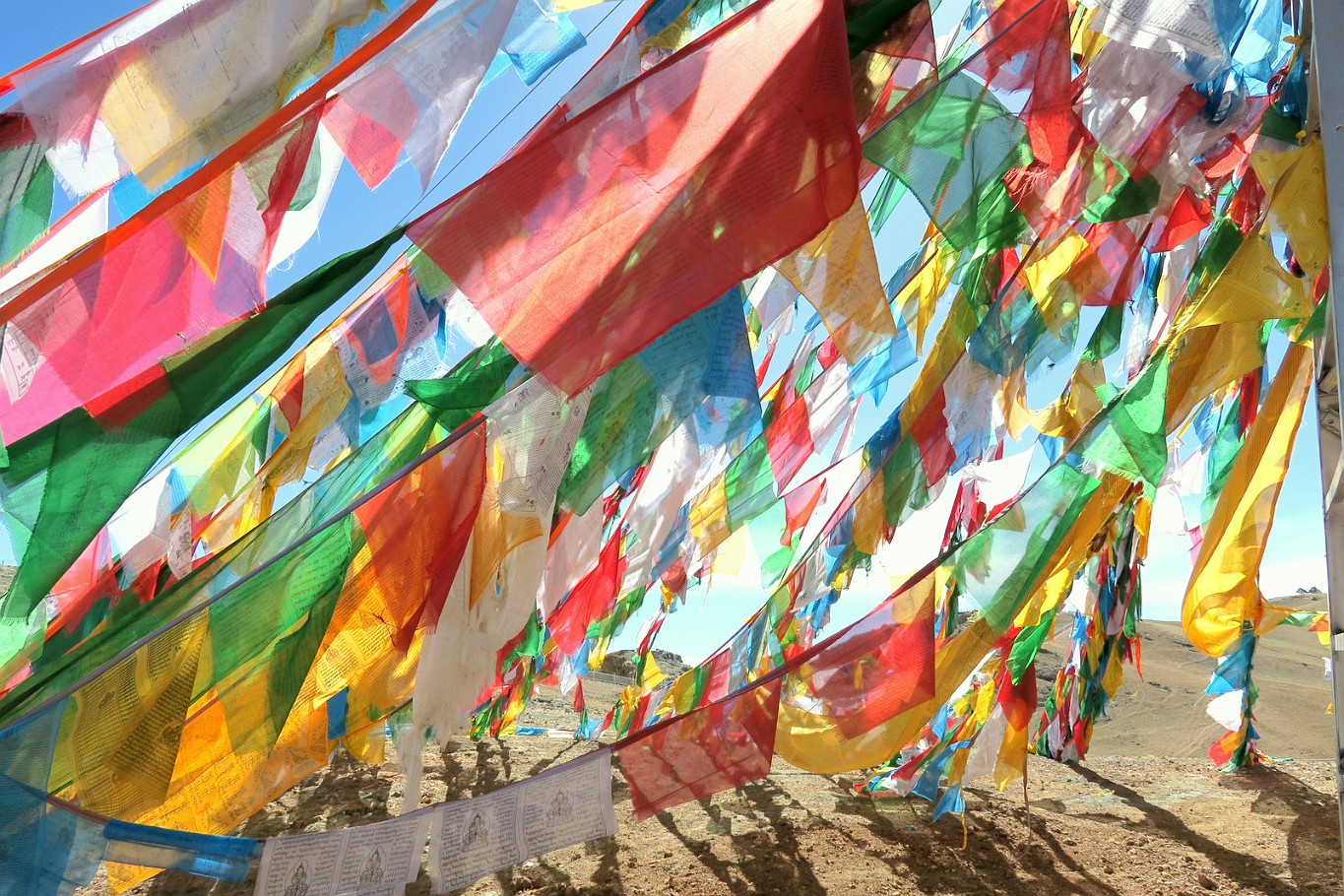 11 Prayer Flags |
.JPG) 12 Pilgrims on Namtso Lake This year, in the Tibetan year of the Sheep, it is being considered particularly sacred and attracts many pilgrims which do the Kora around the lake (to be seen in the lower right of the picture. The full circle around the lake takes 7 - 10 days!. |
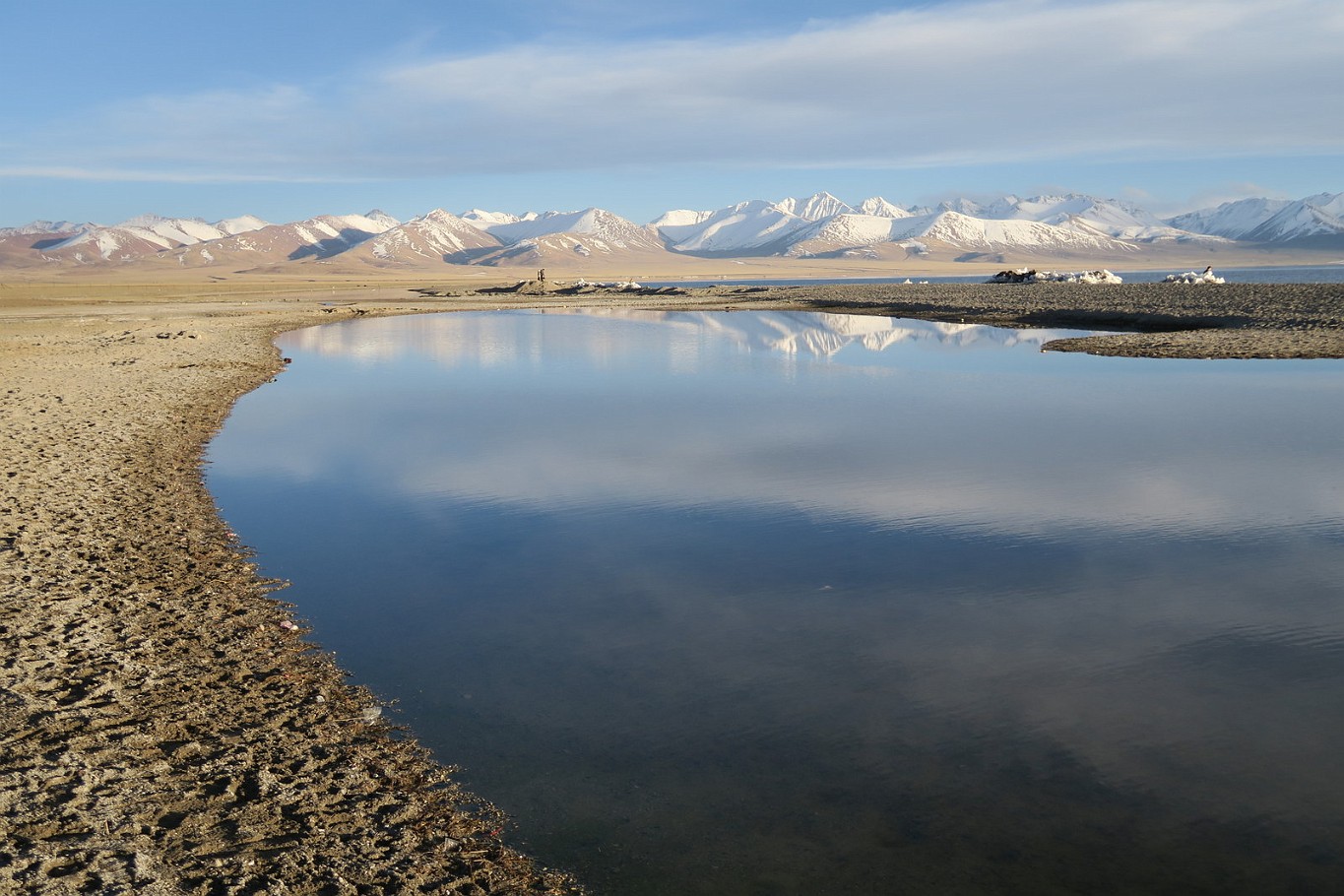 13 Evening Sun Over Namtso Lake |
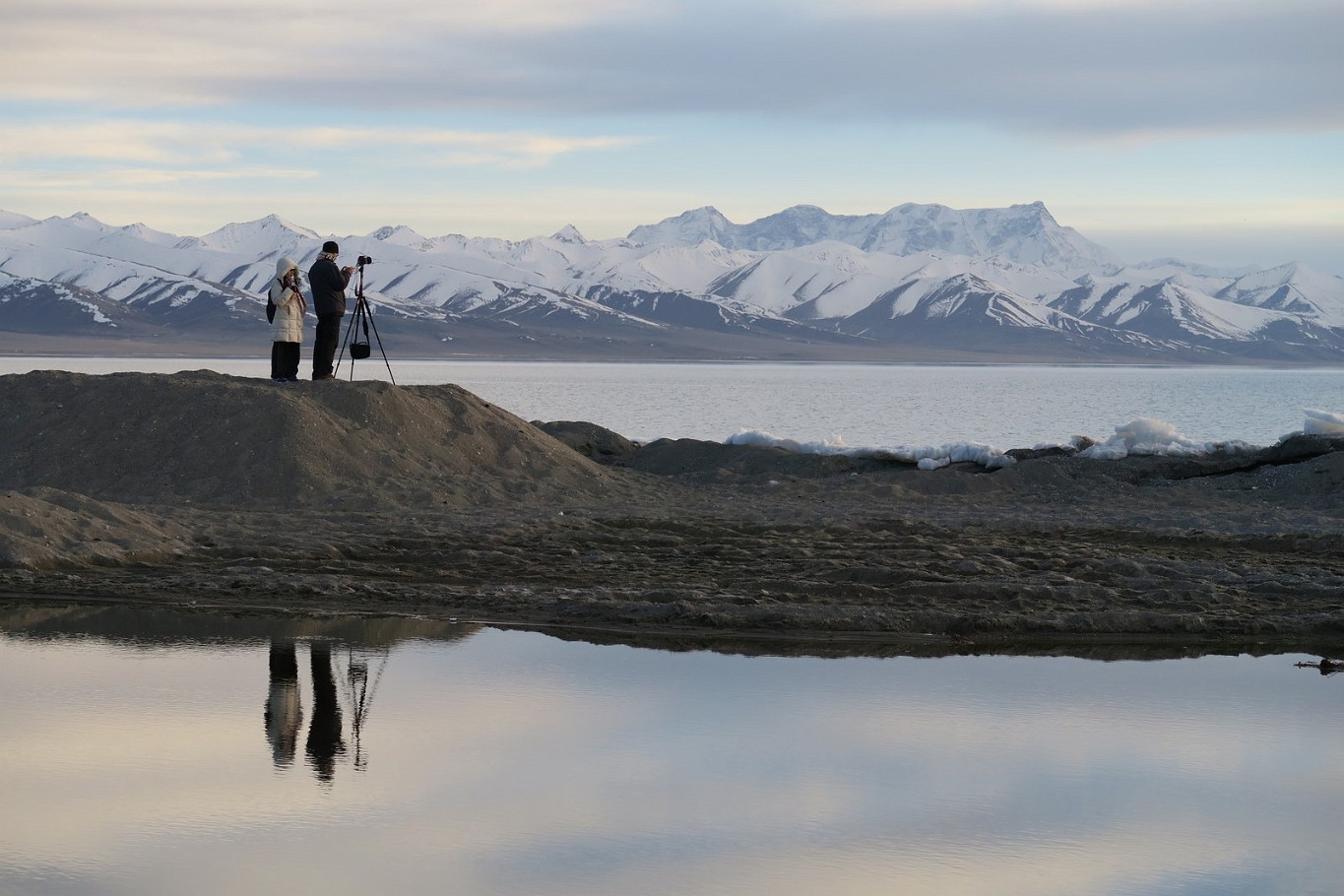 14 Sunset at Namtso Lake |
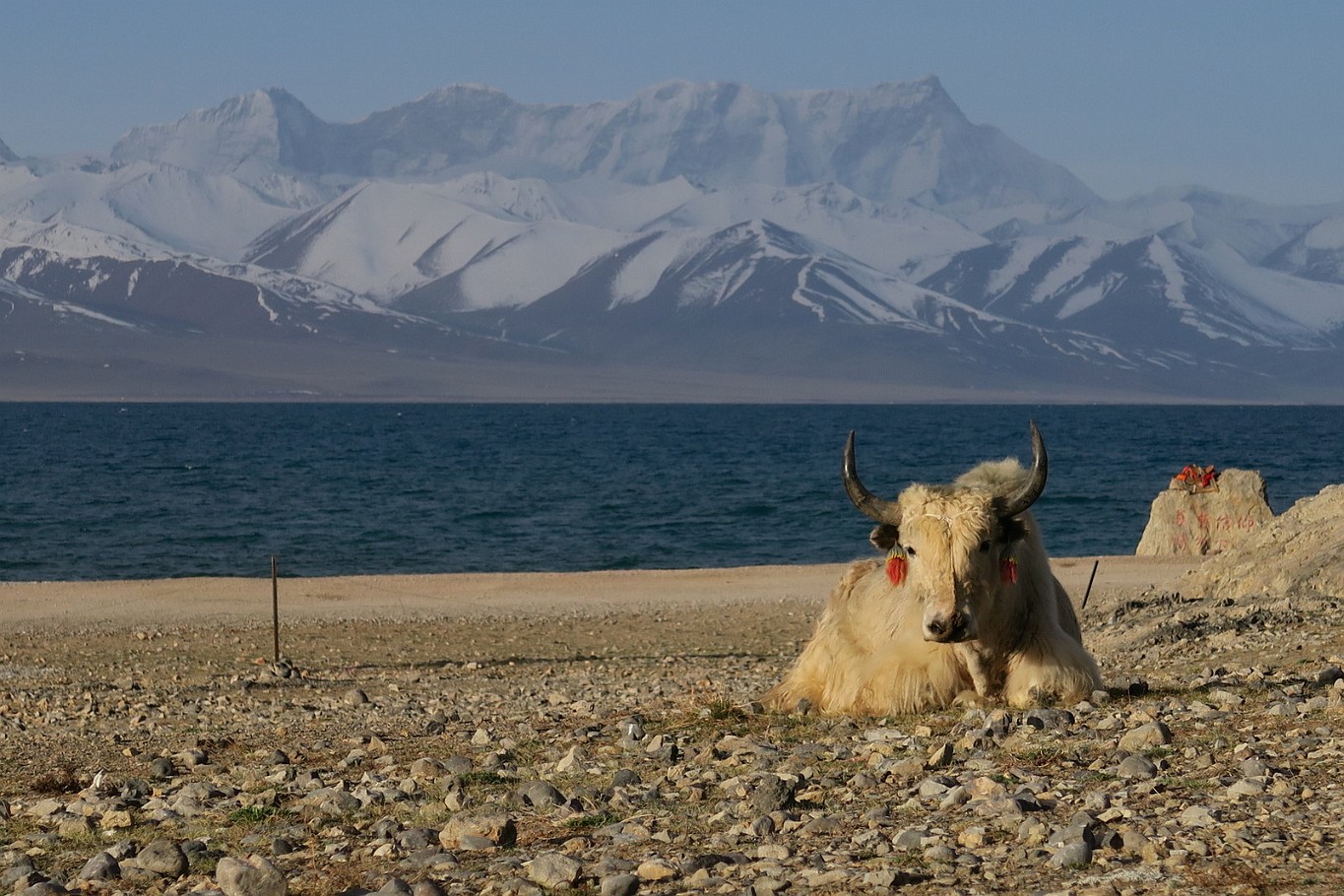 15 Yak Chilling in the Morning Sun |
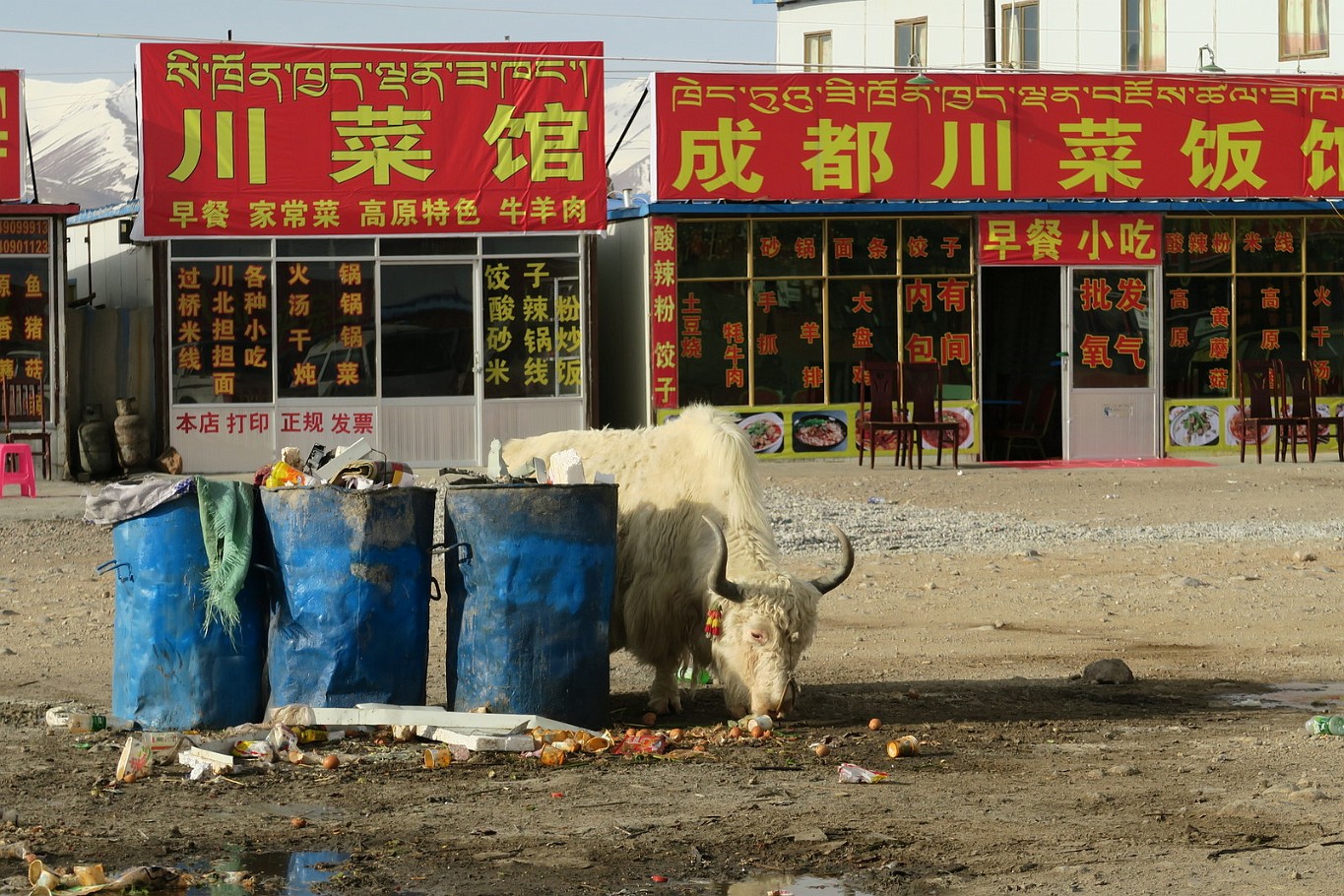 16 Namtso Lake - Behind the Scenes While in terms of scenerey, Namtso Lake is a stunning place, the little village where all the tourists are made to stay, is quite terrible. Cheap and ugly shaks offering food and souvenirs, and just as cheap containers to sleep - the Yak going through the garbage just adds to the cheerless atmosphere of this place. |
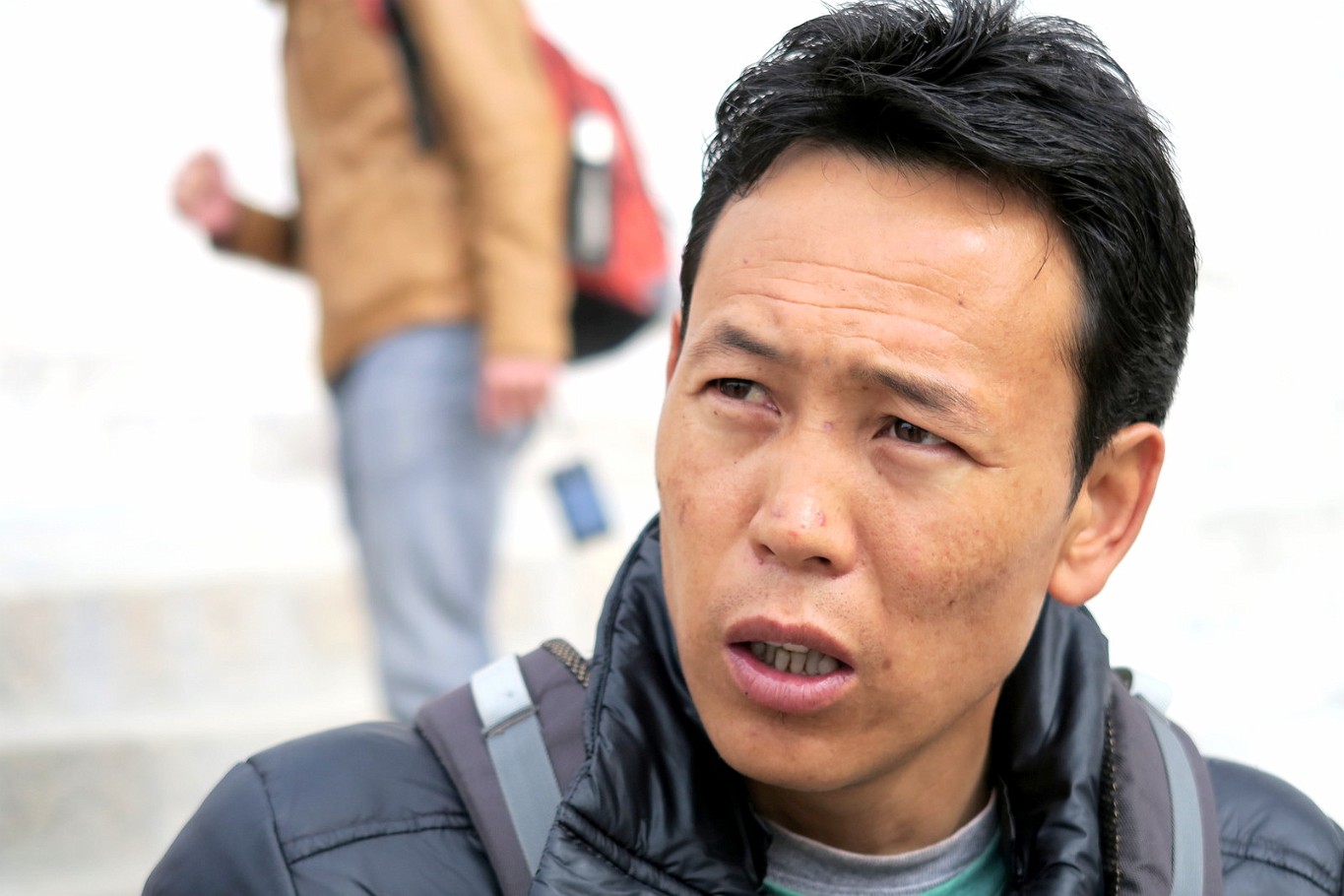 17 Pasang, Tour Guide After Namtso Lake, Peter and I joined a tour group to travel towards the Everest Base Camp (which did not happen in the end, as the camp was closed due to the recent earthquake). Our guide for the tour was Pasang - a great character and very knowledgeable and entertaining guide! |
.JPG) 18 Pilgrim at Potala Palace Lhasa is full of pilgrims, visiting the sacred places and doing the Kora around them. This pilgrim takes a rest when ascending the steep stairs up to the Potala palace. |
.JPG) 19 Wall Mantra Buddhist mantras are placed in many places, also as a mural in this wall on the Potala palace. |
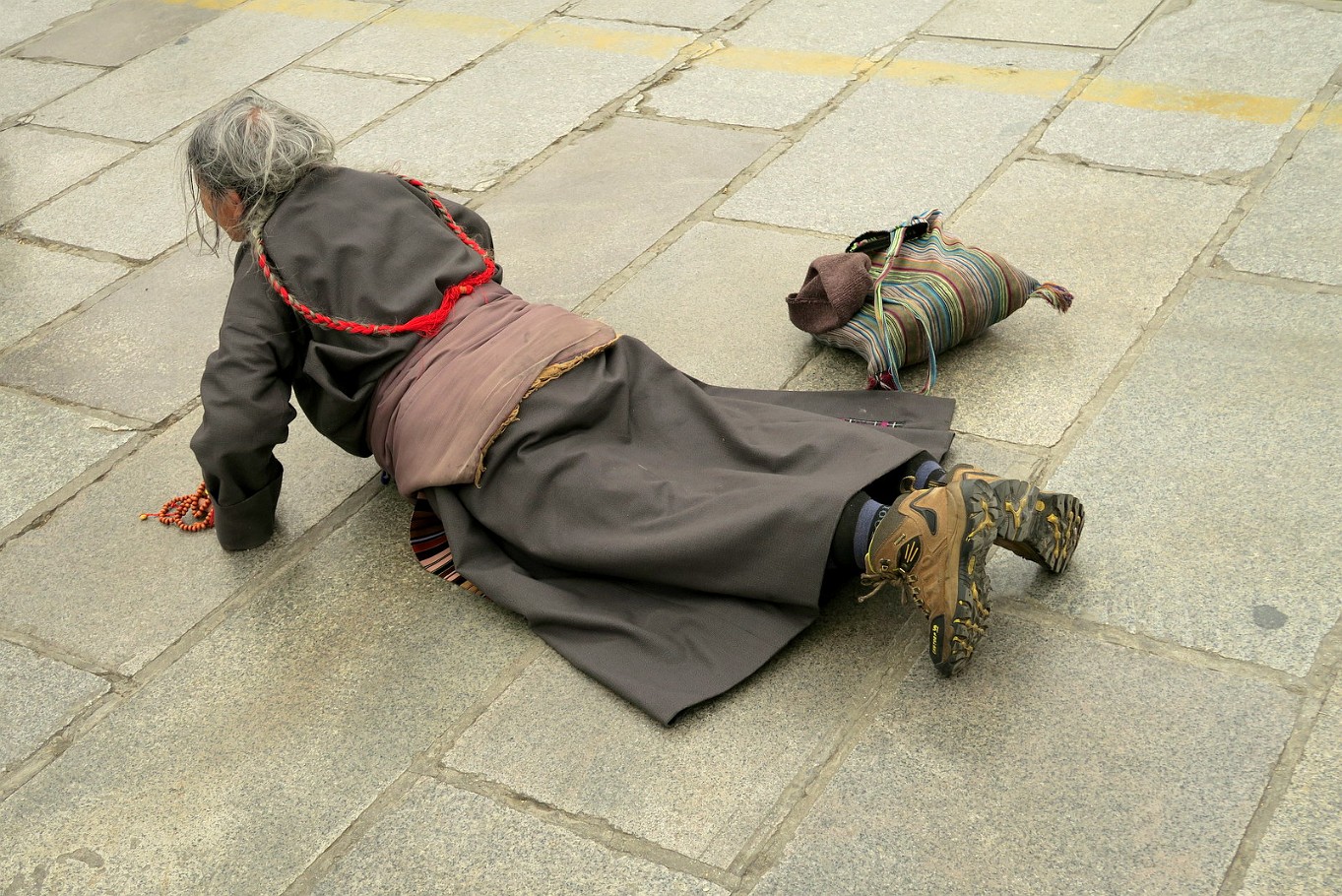 20 Prostrating Pilgrim at Jokhang Temple Prostration is the most devoted way of pilgrimage - some of the pilgrims come from hundreds of kilometers away to Lhasa, prostrating (i.e. laying down on the ground in awe) the whole way, so it takes the months or even years to reach their destination. |
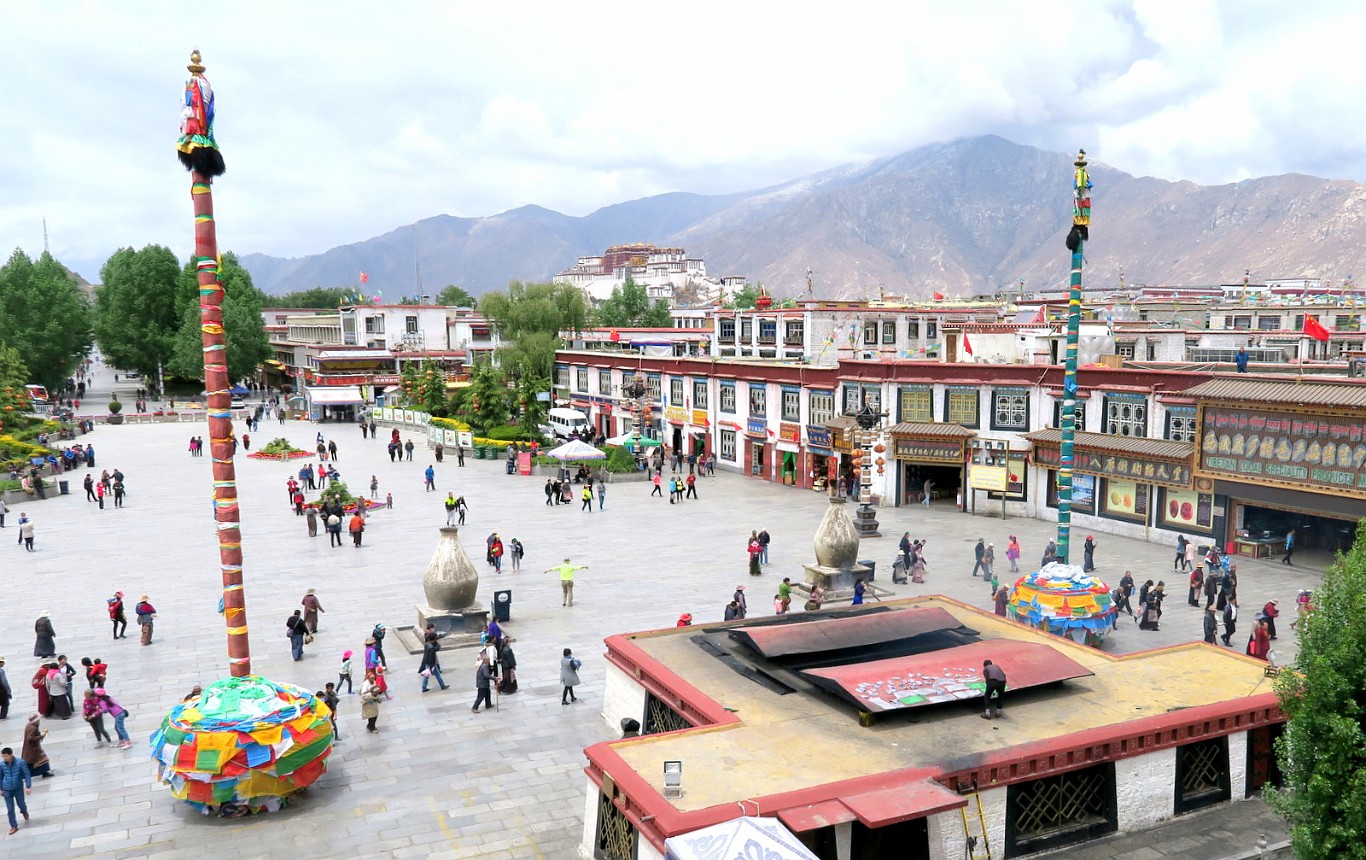 21 View from Jokhang Temple towards Potala The Jokhang Temple in the heart of Lhasa is also the spiritual heart of Tibet, attracting endless numbers of pilgrims which visit the temple and do the Kora around it. In the back, the Potala palace can be seen. Besides the area around the temple and the Potala palace, Lhasa is just as ugly and characterless as any other chinese city. |
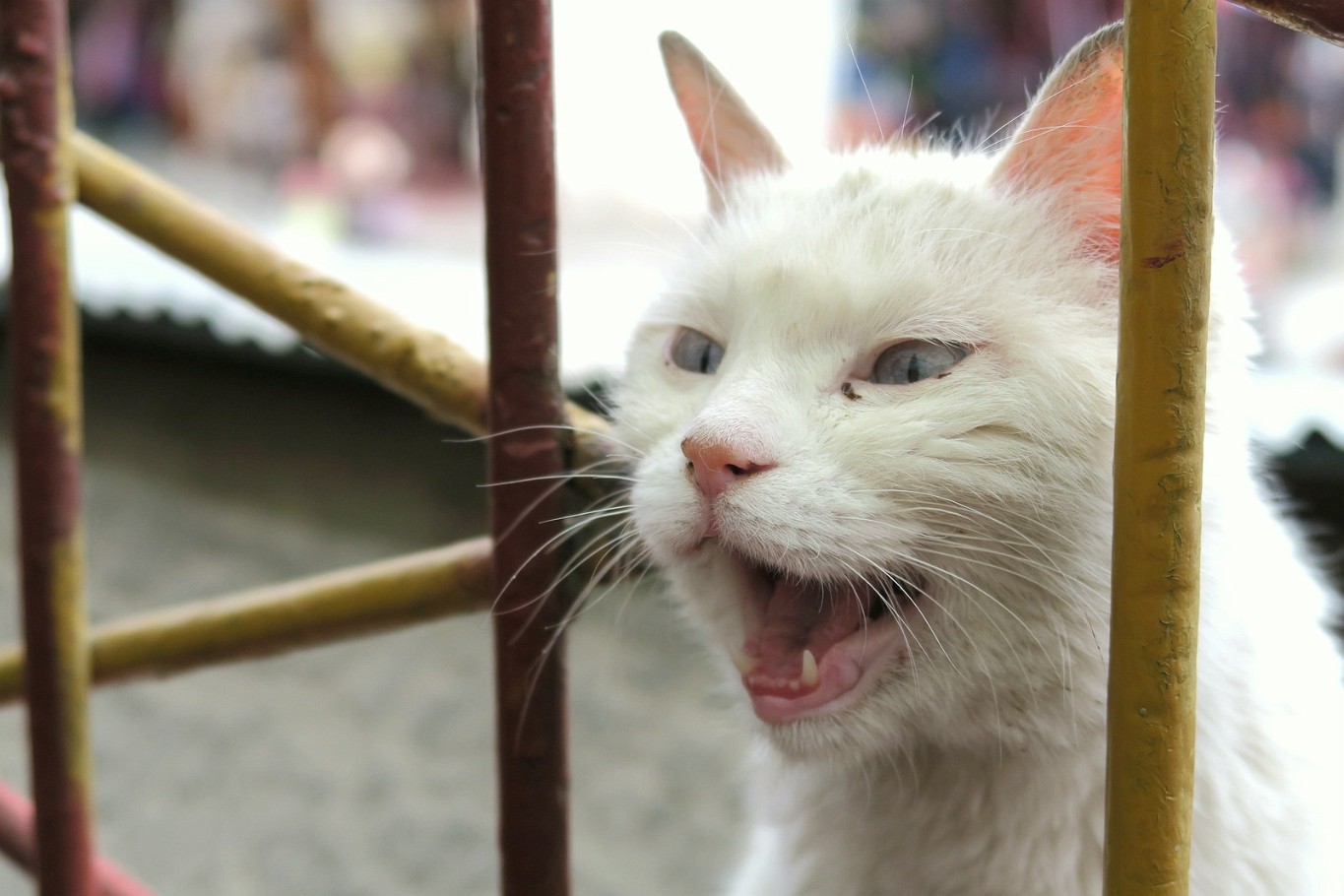 22 Hungry Cat Generally, animals are pretty well off in Buddhist places, as they are being fed by the people - you never know if an animal is the reincarnation of beloved one who has passed away, and you also don't know if you will be in a similar situation in your next life, so you better treat them well. This cat looked pretty hungry, though, begging for food at our table in the restaurant. |
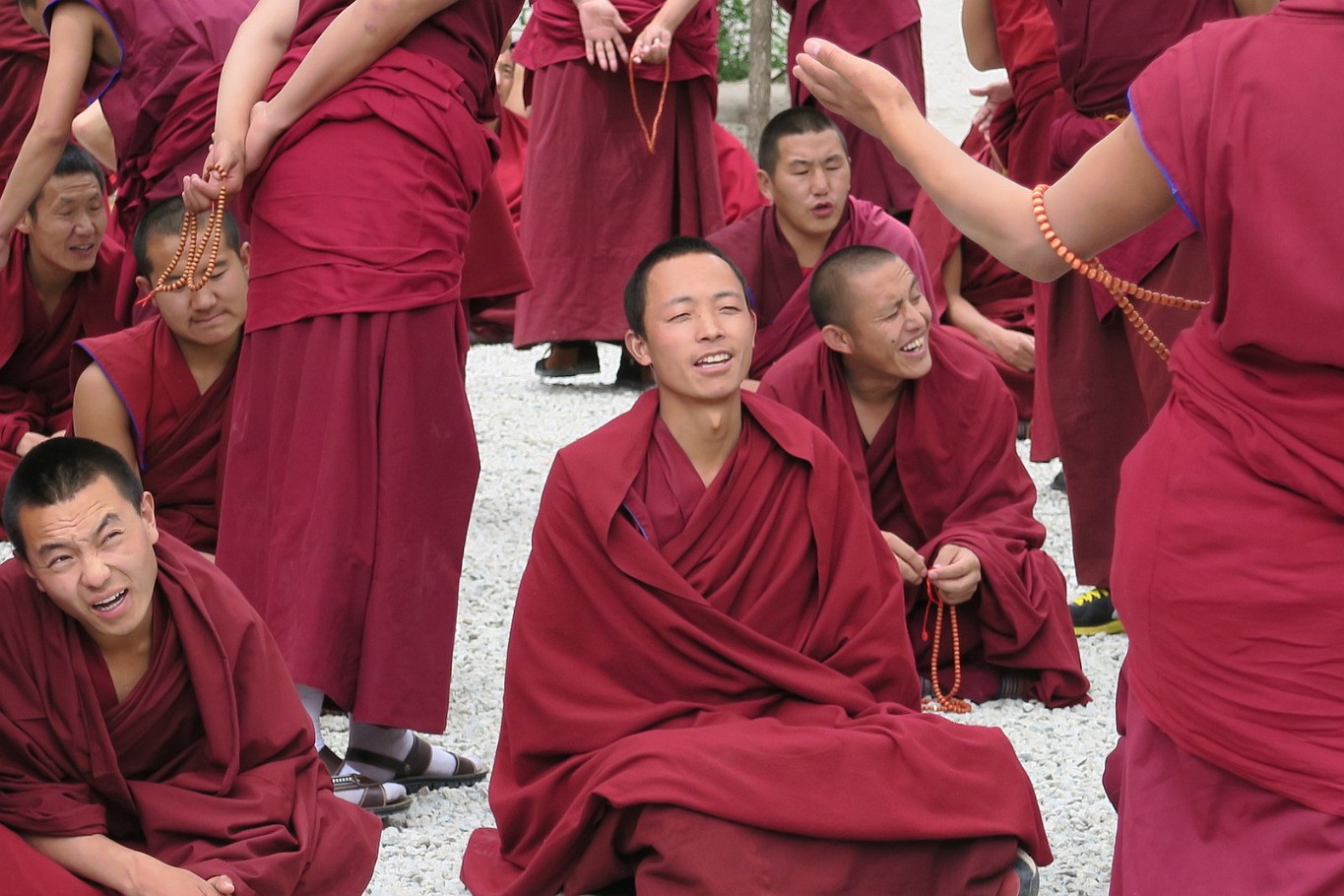 23 Monk Debating at Sera Monastery |
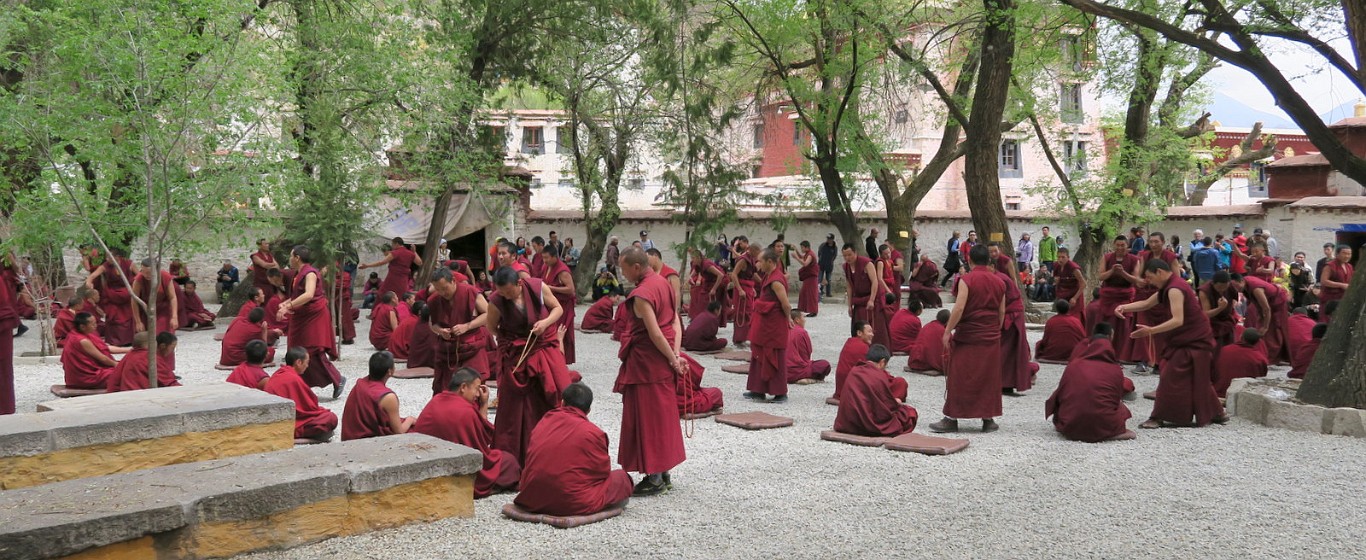 24 Monk Debating at Sera Monastery Every afternoon at Sera Monastery in Lhasa, monks are debating. The higher, more experienced monks are challenging the younger ones with spiritual, moral or philosophical questions. Their answer is being confirmed with a loud clap of the hands, some theatrical gestures and possibly a debate over the correctness of the answer, so this becomes a very lively and noisy event. |
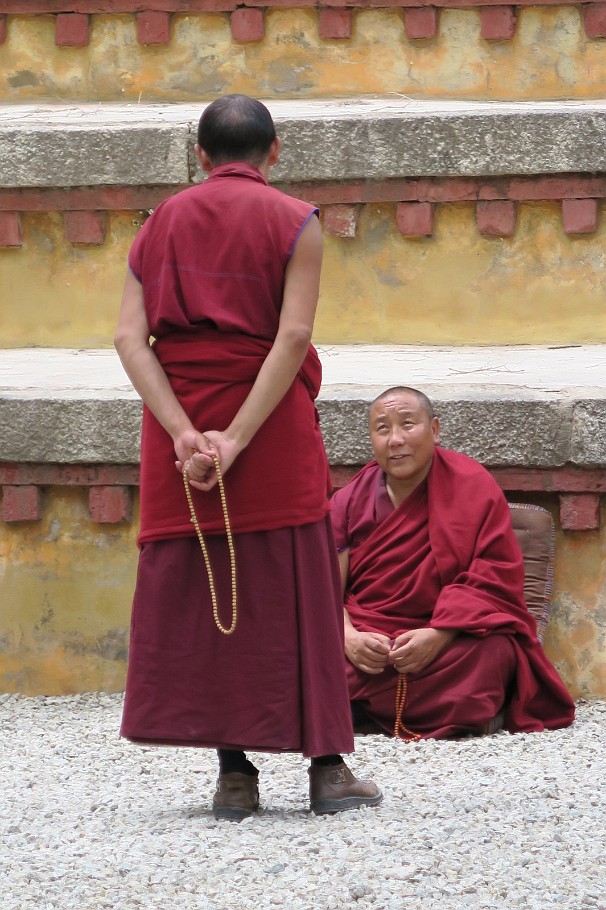 25 Monk Debating at Sera Monastery |
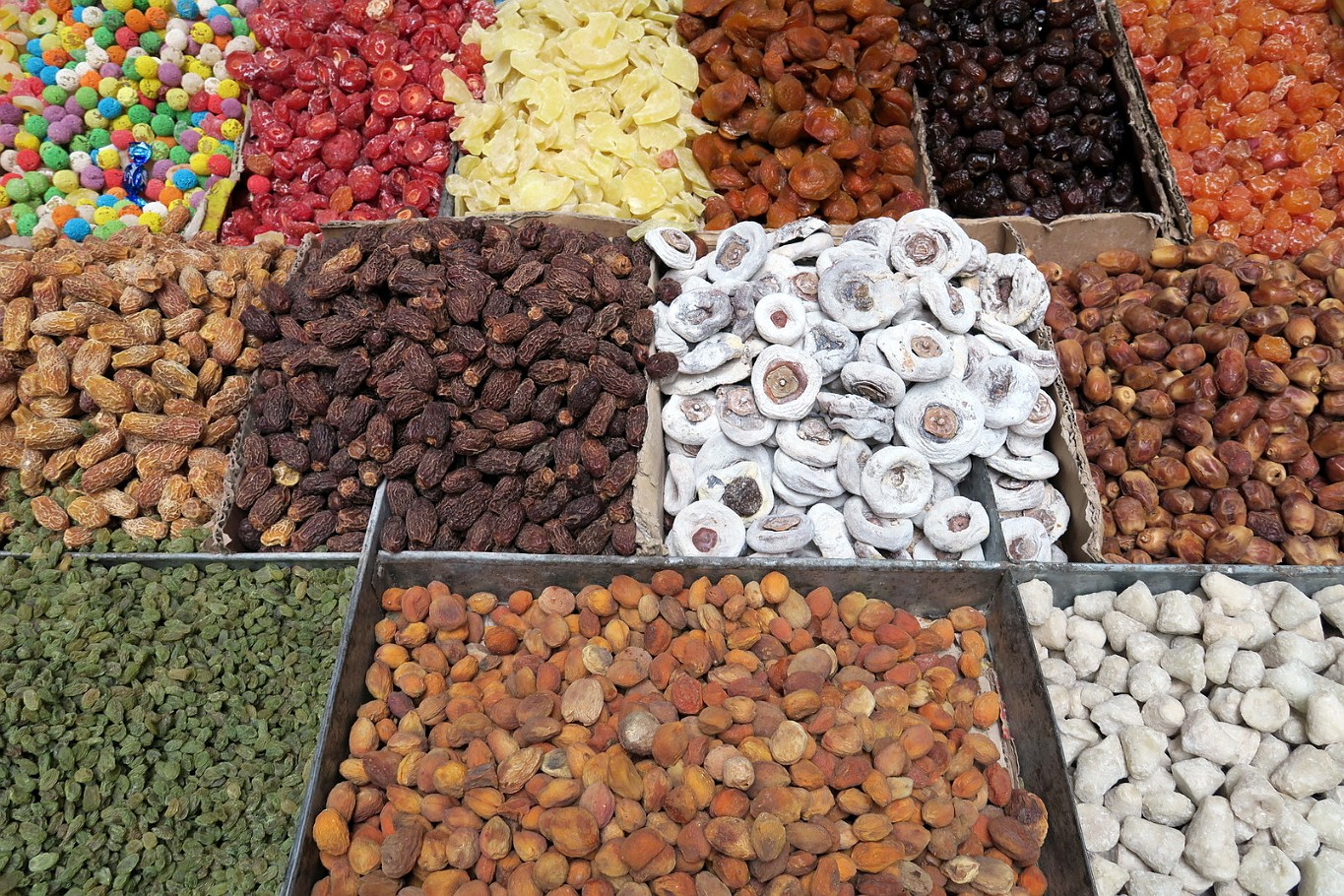 26 Colorful Layout of Dried Fruit at Lhasa's Thromsikkhang Market |
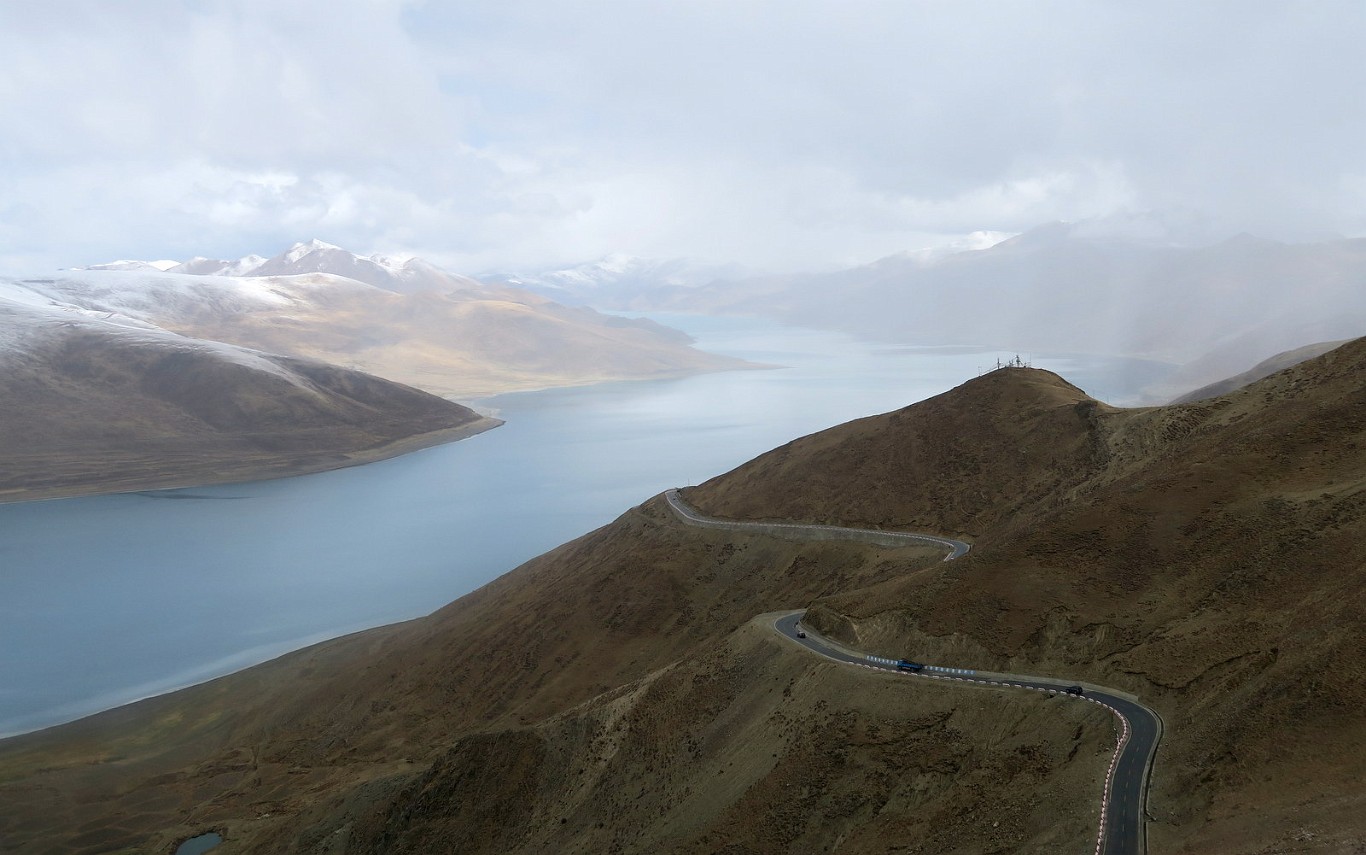 27 Yamdrok-tso Lake After some morning rain, the clouds are clearing up over Yamdrok-tso Lake, one of the four holy lakes in Tibet. |
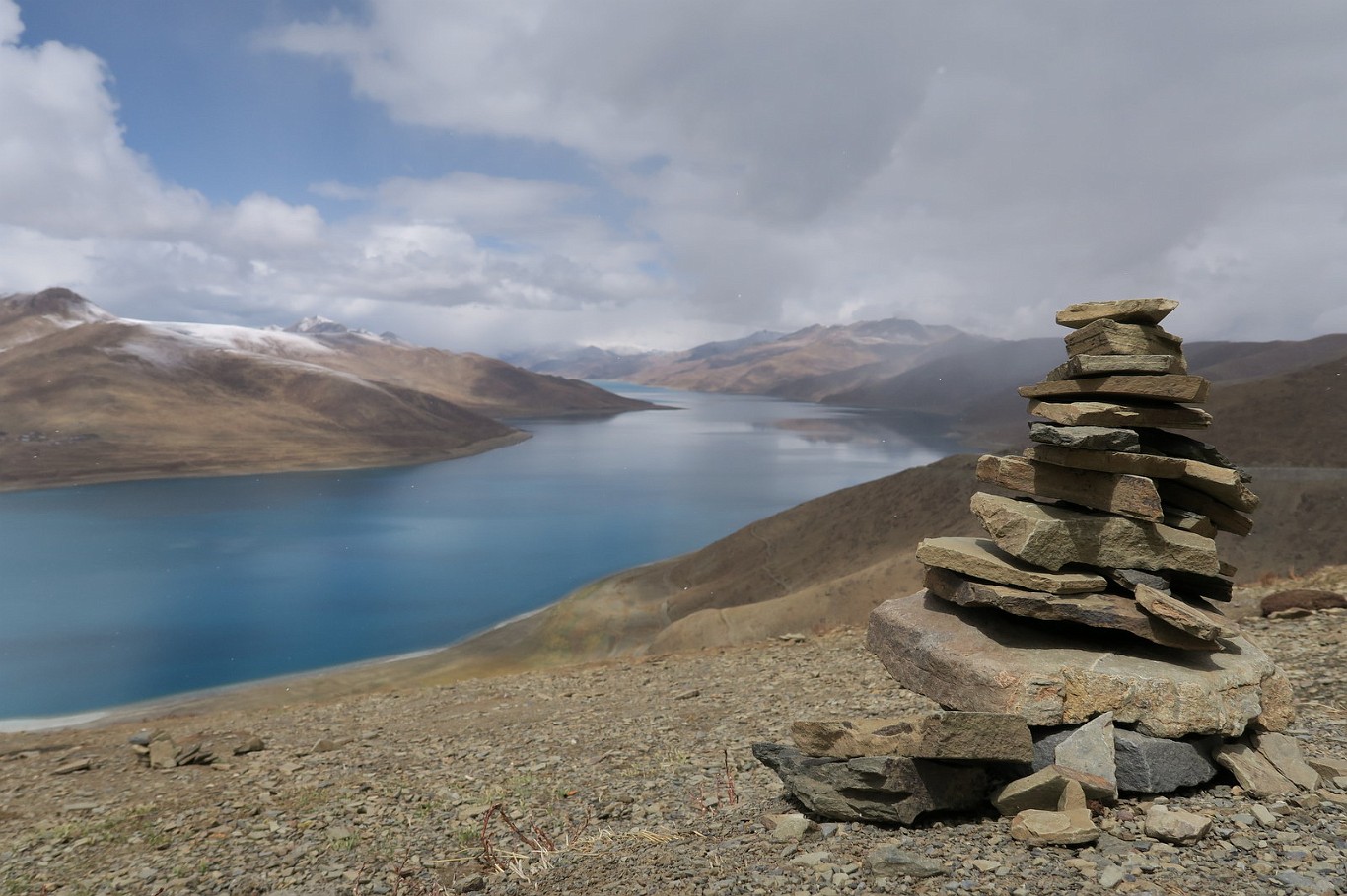 28 Yamdrok-tso |
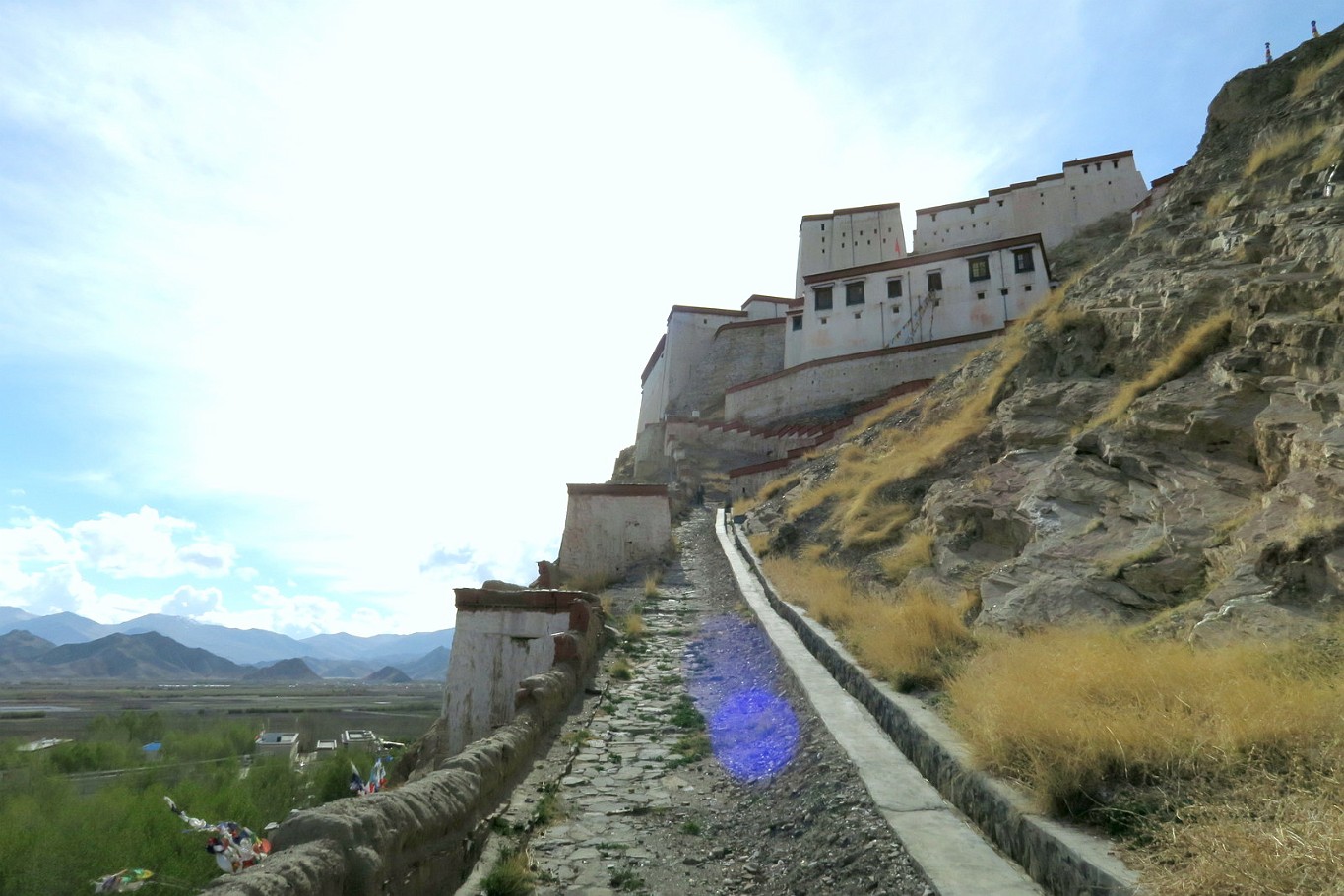 29 Gyantse Dzong At first sight, the fortress of Gyantse looks quite western-like, but was actually build by the Tibetans in order to fight of the British (they succeeded). |
.JPG) 30 Slow Businesss - Quick Nap Because of the recent earthquake, many tourist don't come to Tibet anymore - as a result, the souvenir buisness is going slow, givinig plenty of opportuninty for an early afternoon nap :-) |
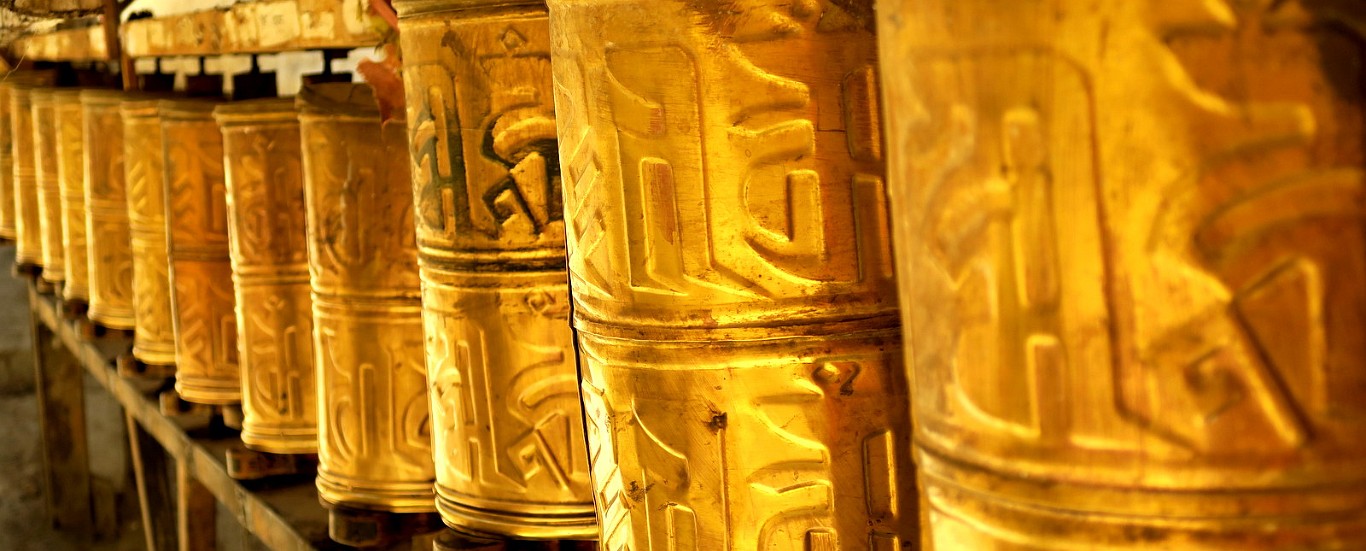 31 Prayer Wheels All the Koras (the pilgrim trails around the holy places) are aligned with countless prayer wheels, which are being turned by the pilgrims in order to send the mantras, which are placed inside the wheels, towars the skies. |
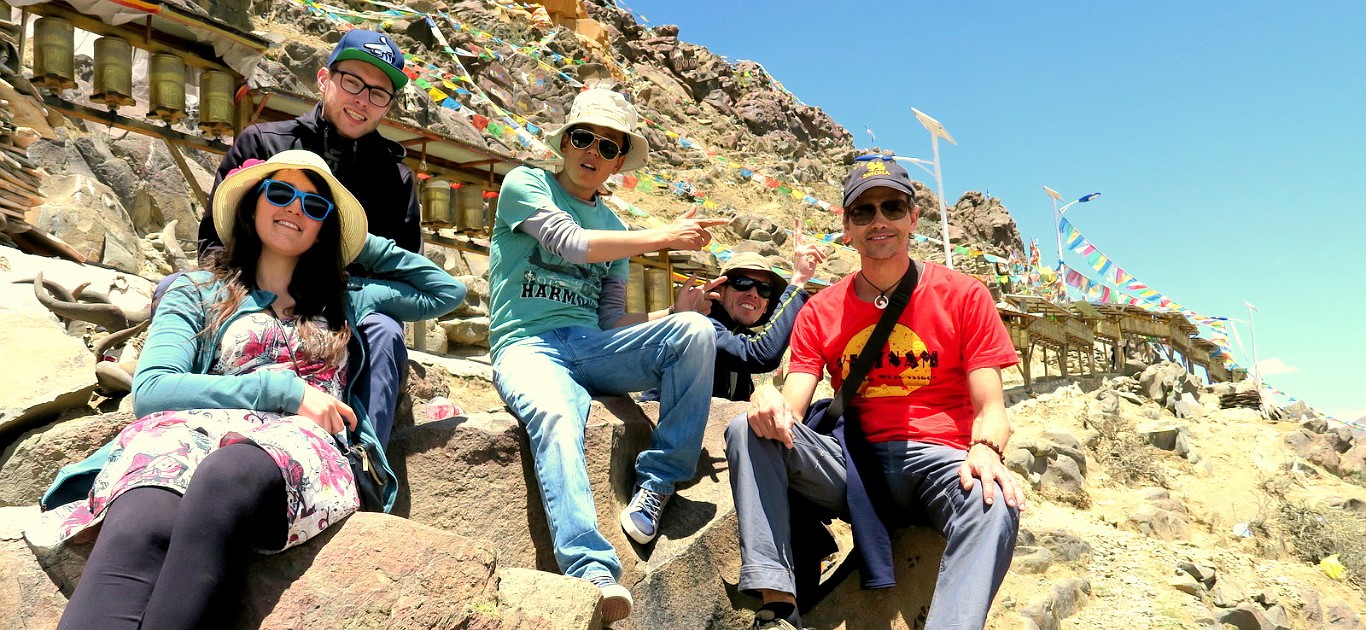 32 Our Travel Group Our tour group, on the left the German couple Anne and Markus, our guide Pasang in the center, and Peter and I on the right. Missing is Hari, who is taking the picture. In the background is the endless line of prayer wheels on the Kora around the Tashilhunpo Monastery in Shigatse. |
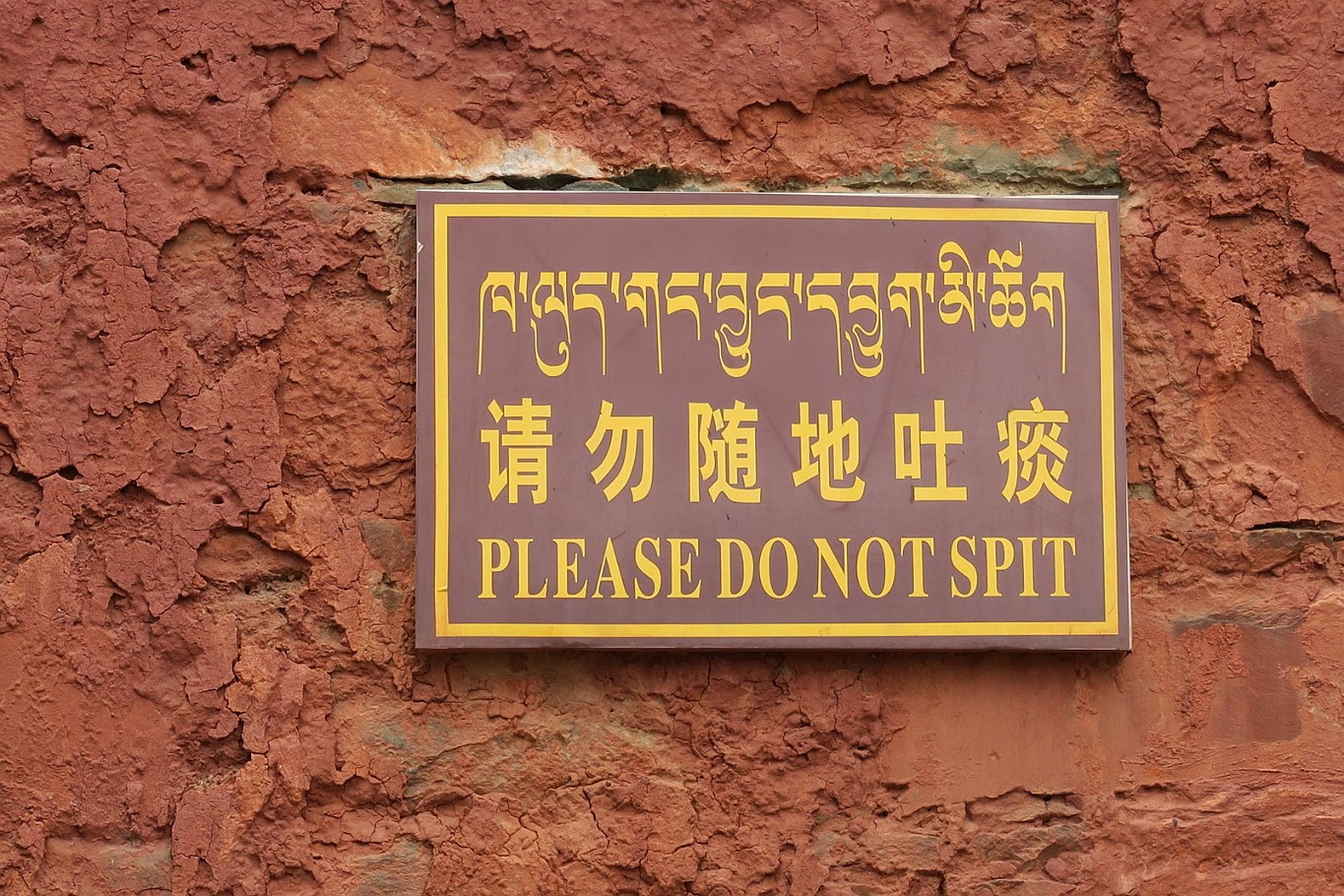 33 Tibetans Don't Like Spitting For Europeans, this sign might seem funny, but it is a fact that the chinese like to spit everywhere. It is totally common to see them spit on the floor in bars and restaurants, no matter if there is a carpet or not. Tibetans abhor this practice, so it is not surprising they put up signs like this in their holy places (here in Tashilhunpo Monastery in Shigatse). |
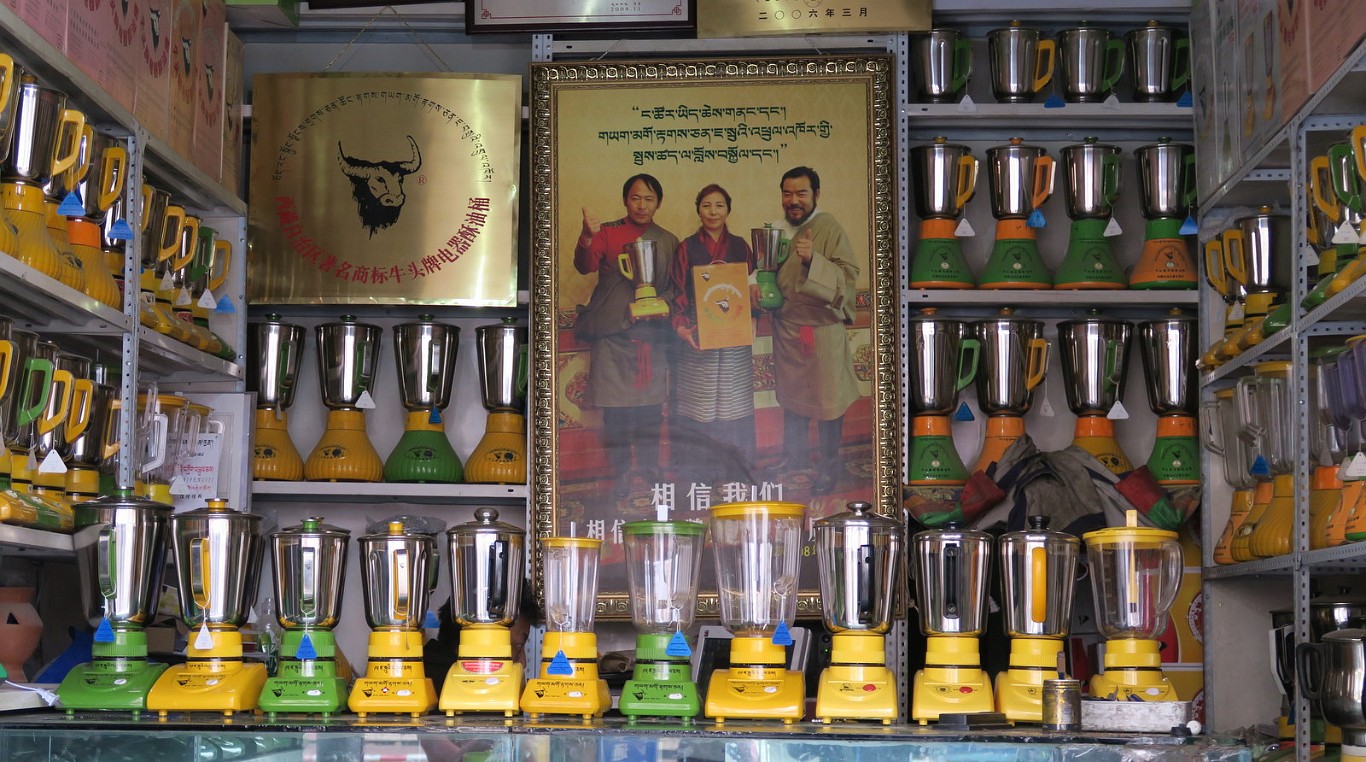 34 "Sblended" How could anyone resist to buy one of these blenders whith such a splendid advertisment? |
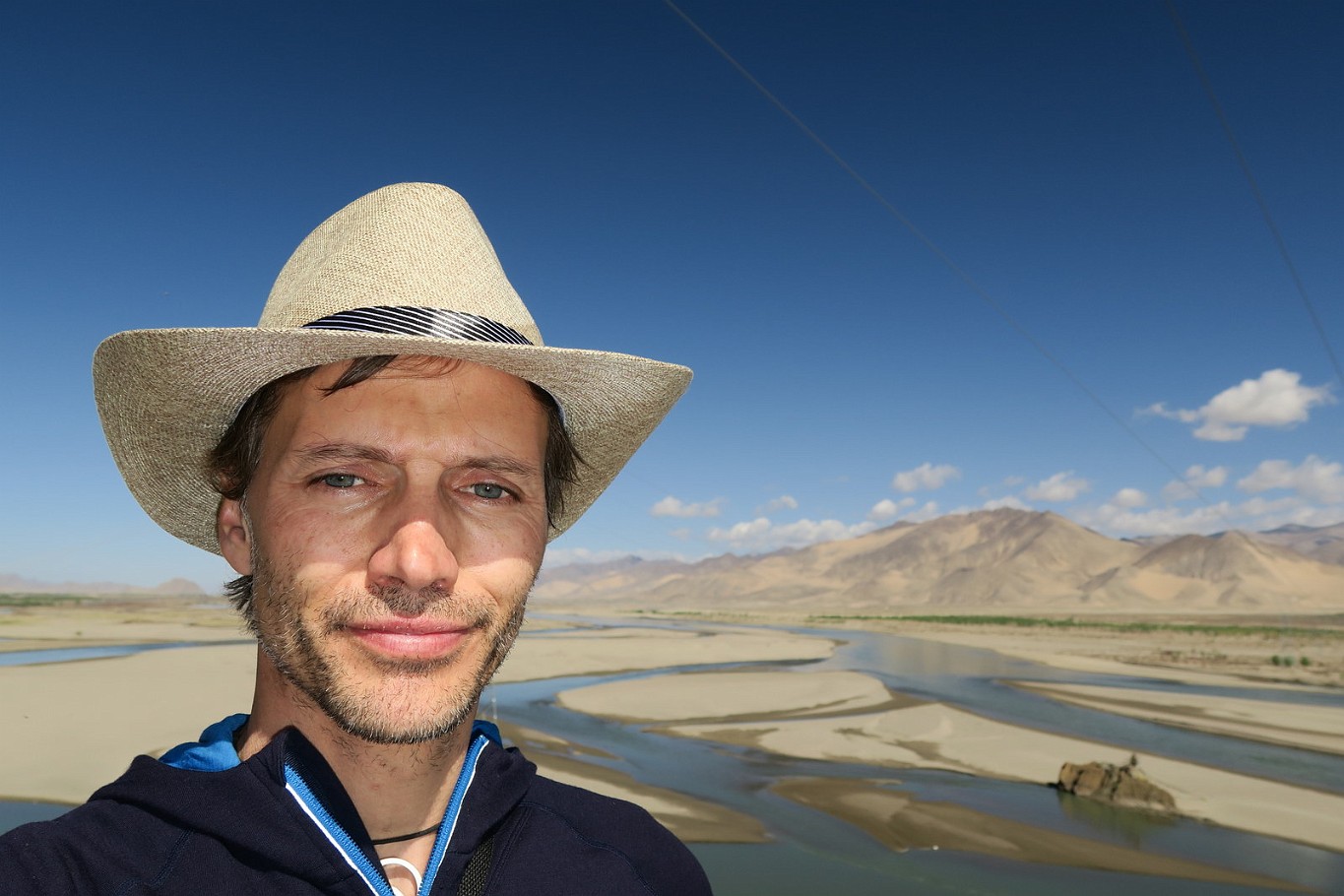 35 Cowboy? No cowboy, but me with a (tibetan) cowboy hat - the girls of our tour group convinced me that this is the perfecct accessory for me :-) In the back, some typical tibetan landscape unfolds, desert like, sandy and dry ground, despite the river running through it. |
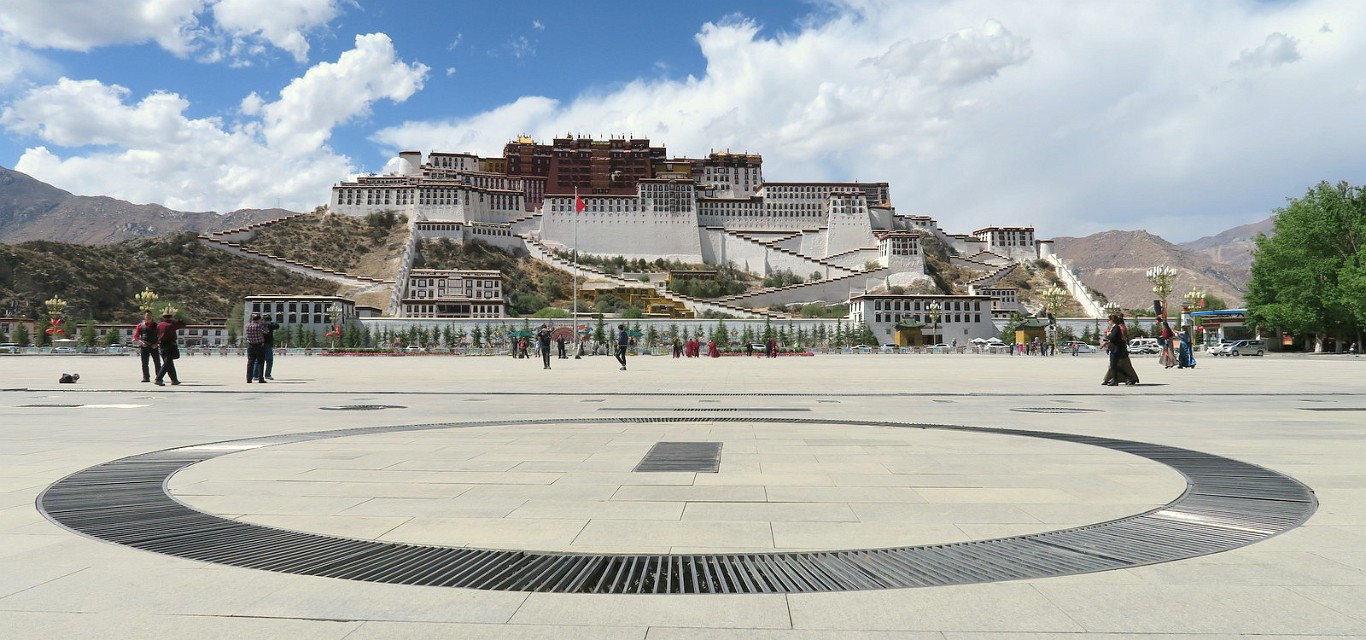 36 Back in Lhasa Back in Lhasa and still admiring the Potala Palace. |
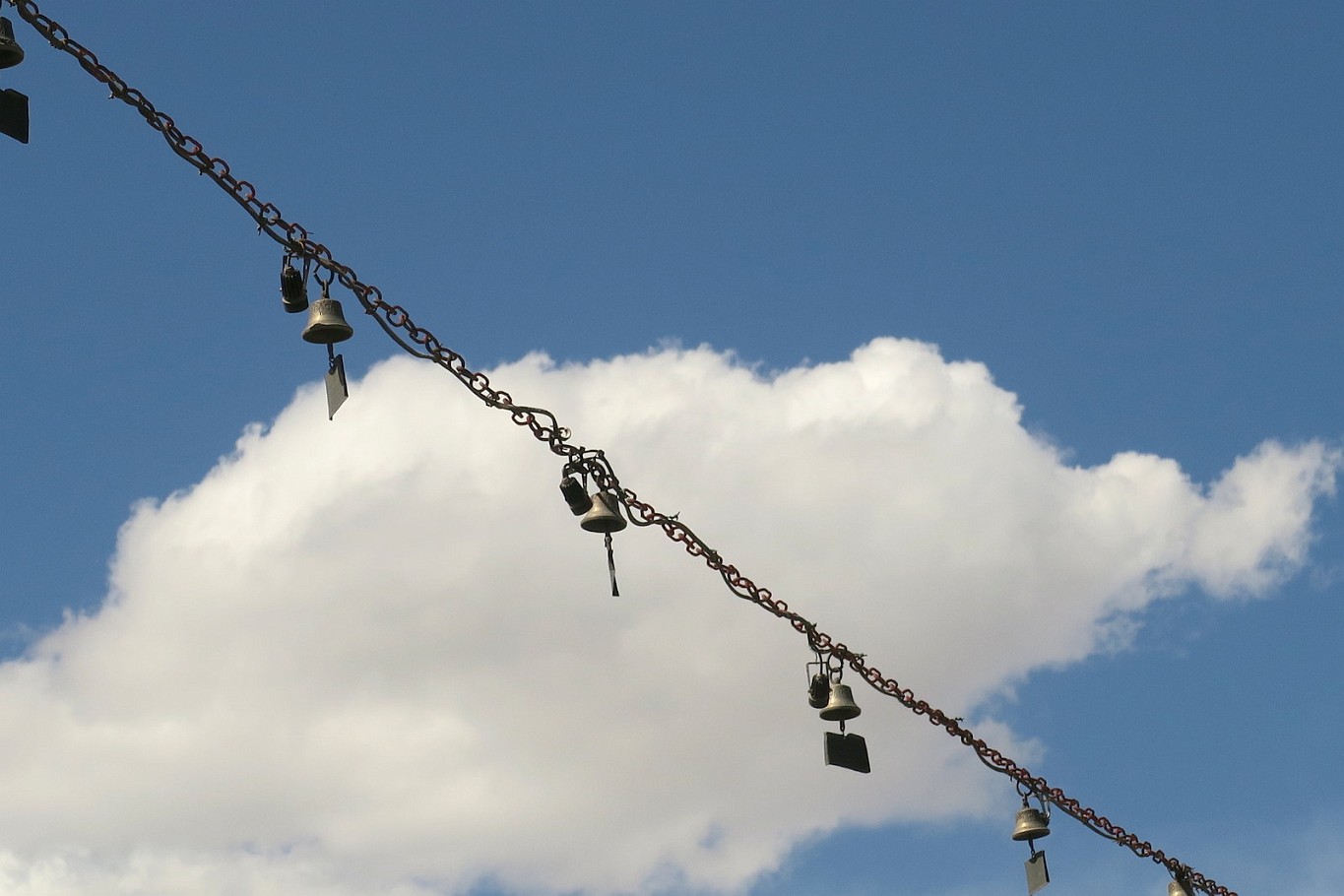 37 Jingle Bells It seems that here everything is about mantras and the wind - here the buddhist prayers are placed on metal plates and hung at little bells, so the prayers are carriied away with the jingle of the bells. |
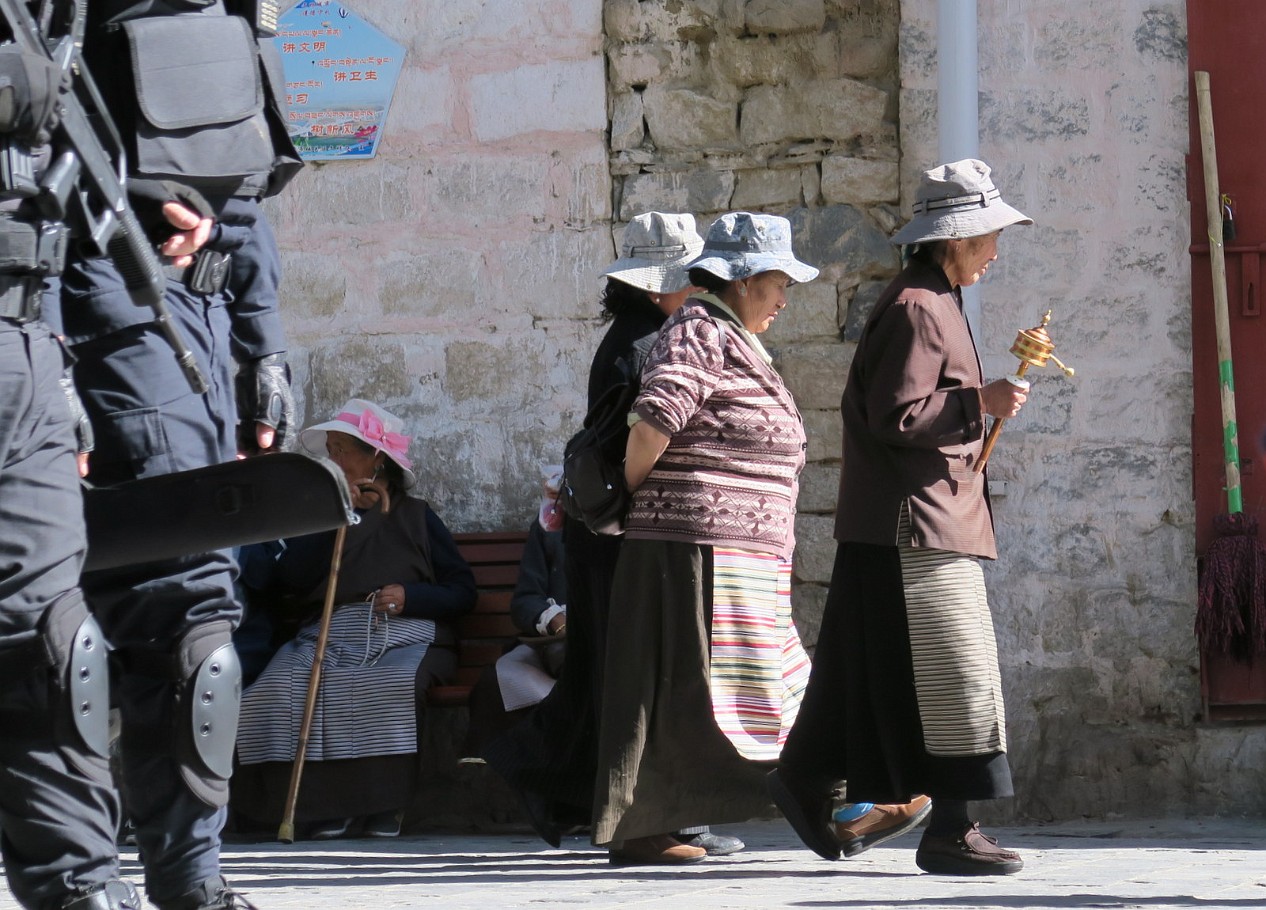 38 Heavenly Pilgrims - Heavily Guarded Pilgrims doing the Kora, while being closely guarded by chinese policemen. A very typical scene - all the sacred places in Titbet, which attract masses of pilgrims, are heavily guarded - ostensibly to protect the wholy places from terrorist attacks, but of course it is in the first place to prevent from groups of tibetans gathering and organising protest. |
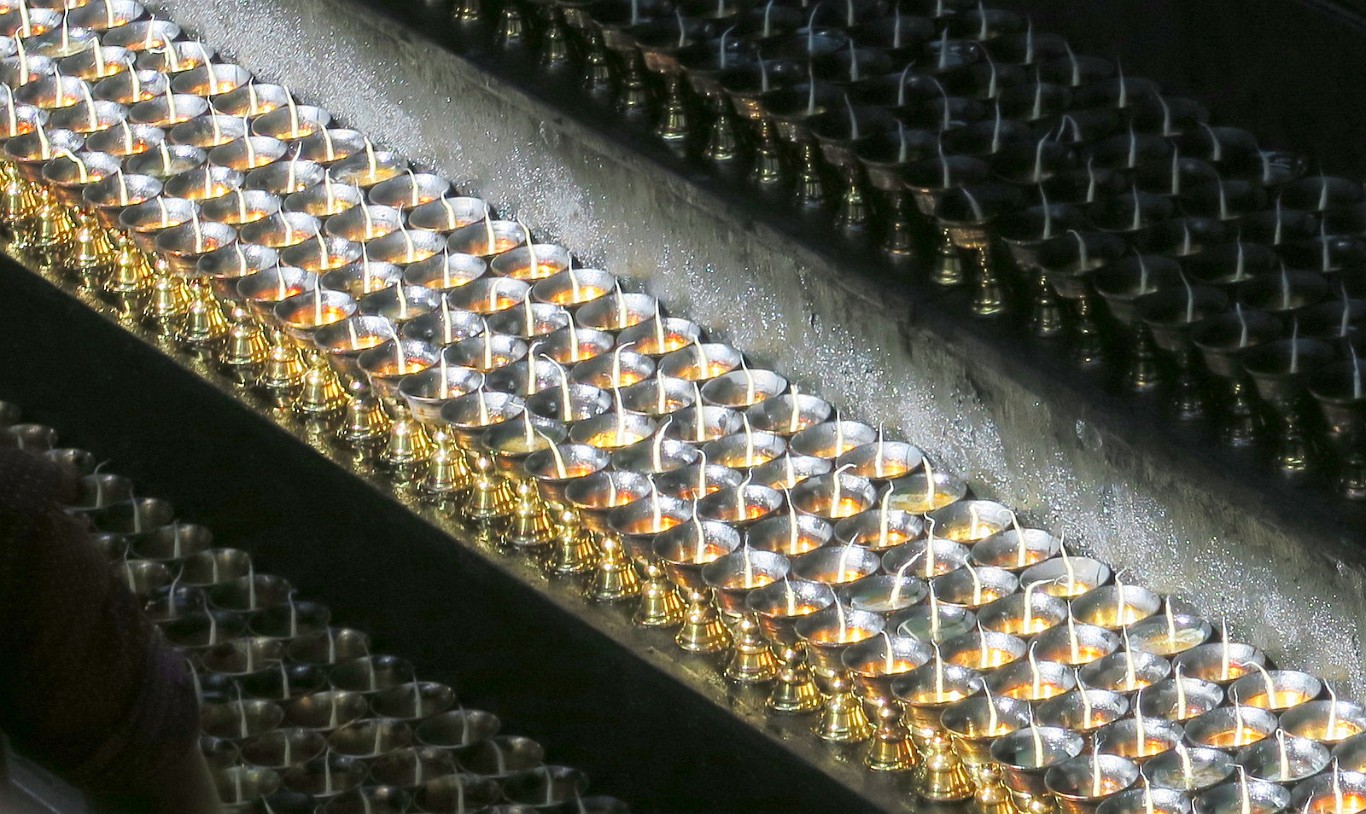 39 Butter Lamps in Jokhang Temple (Lhasa) Butterlamps are a conspicious feature of Tibetan buddhist temples and symbolize the illumination of wisdom as well as the transition from a substance into illumination (i.e. enlightment). Futhermore, they help to focus the mind and therefore aid meditation. |
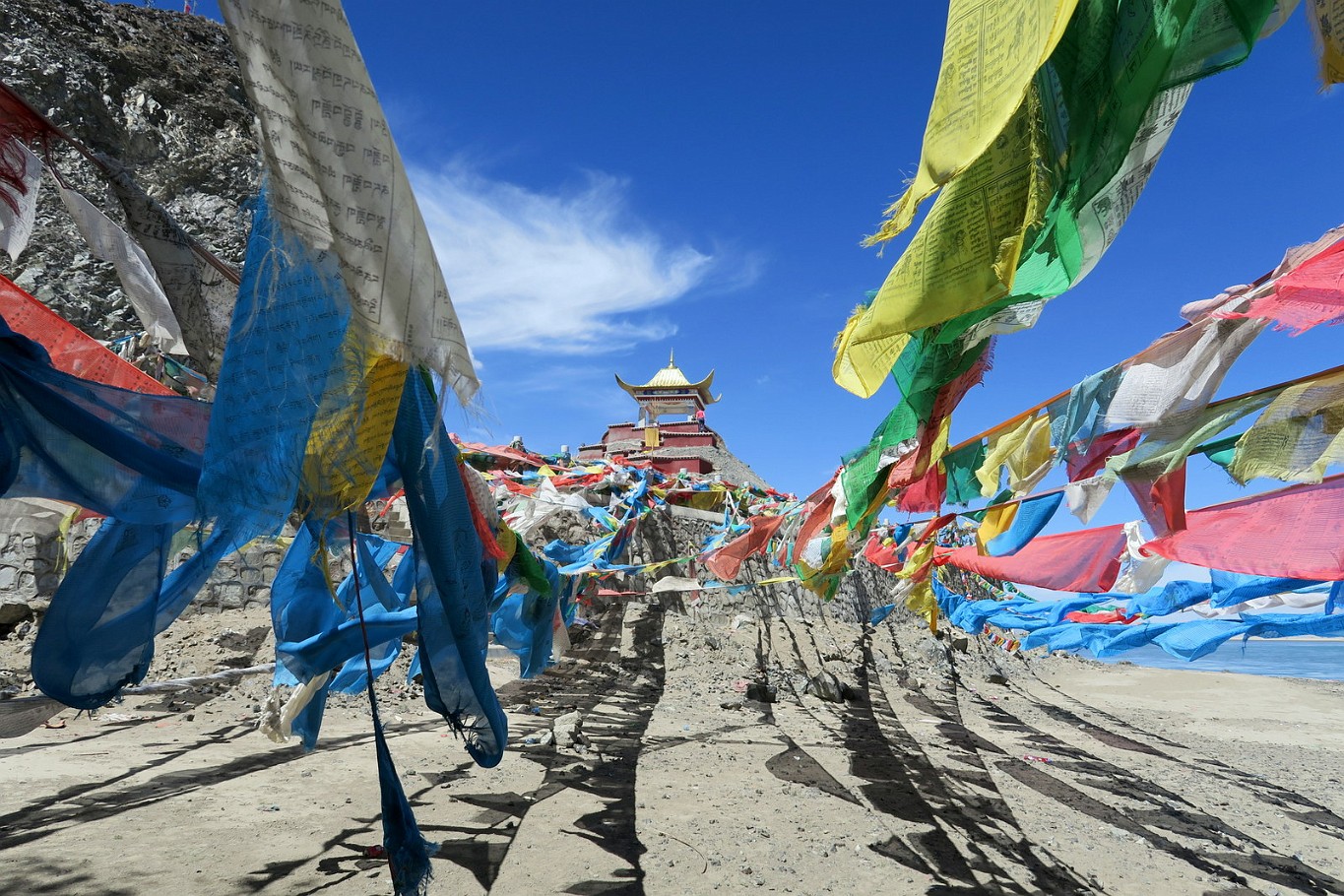 40 More Prayer Flags |
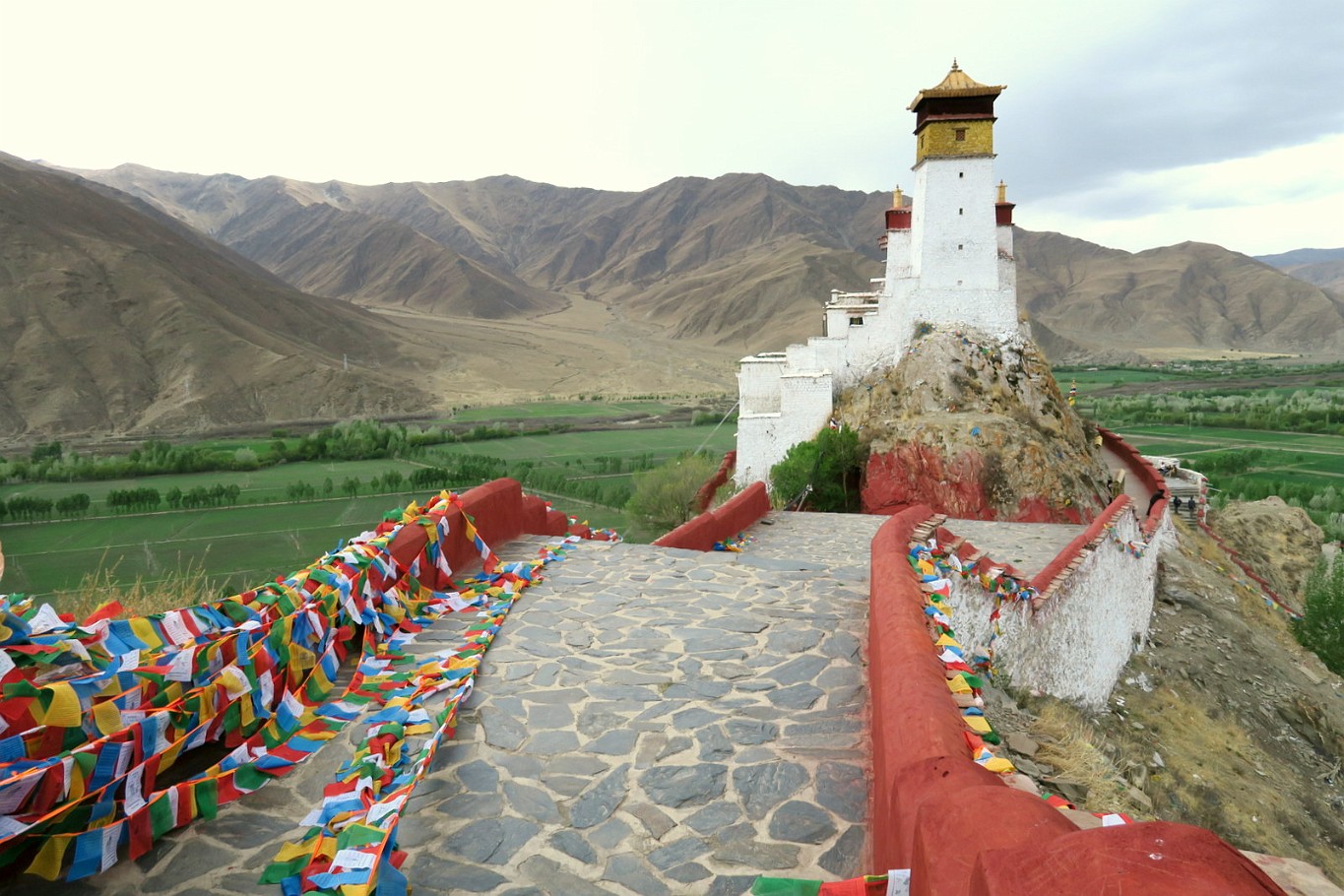 41 Yumbulagang Palace As an alternative program to the Everest base camp, which we werew not able to visit due to the recent earthquake, we visited this palace in Tsetang, which according to legend, had been built for the first king of Tibet. |
 42 Untitled |
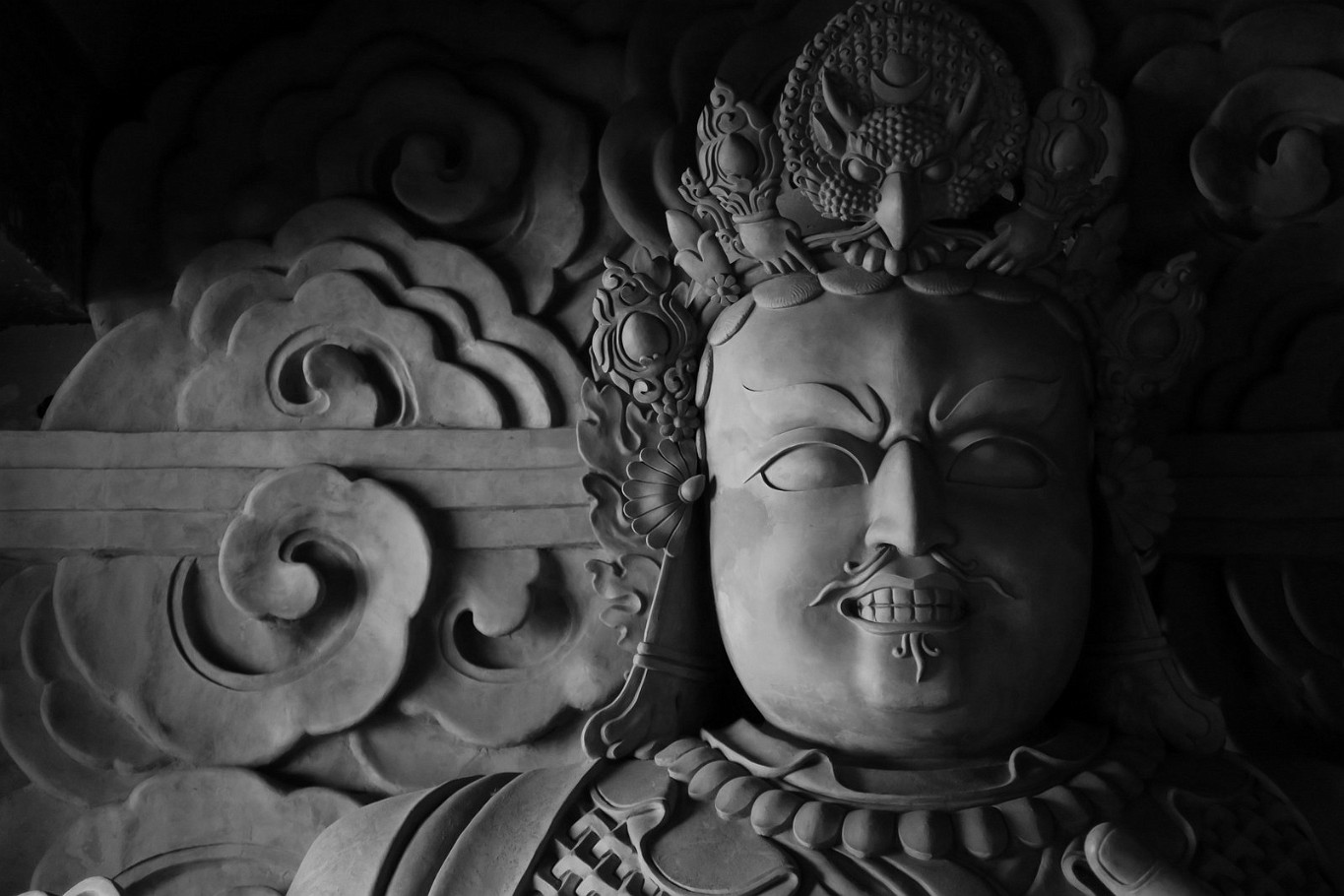 43 Protector God All tibetan monasteries show some fierce looking creatures at their entrances - protector gods protecting the monastery from evil spirits. This one is at the Changzhug monastery in Tsetang. |
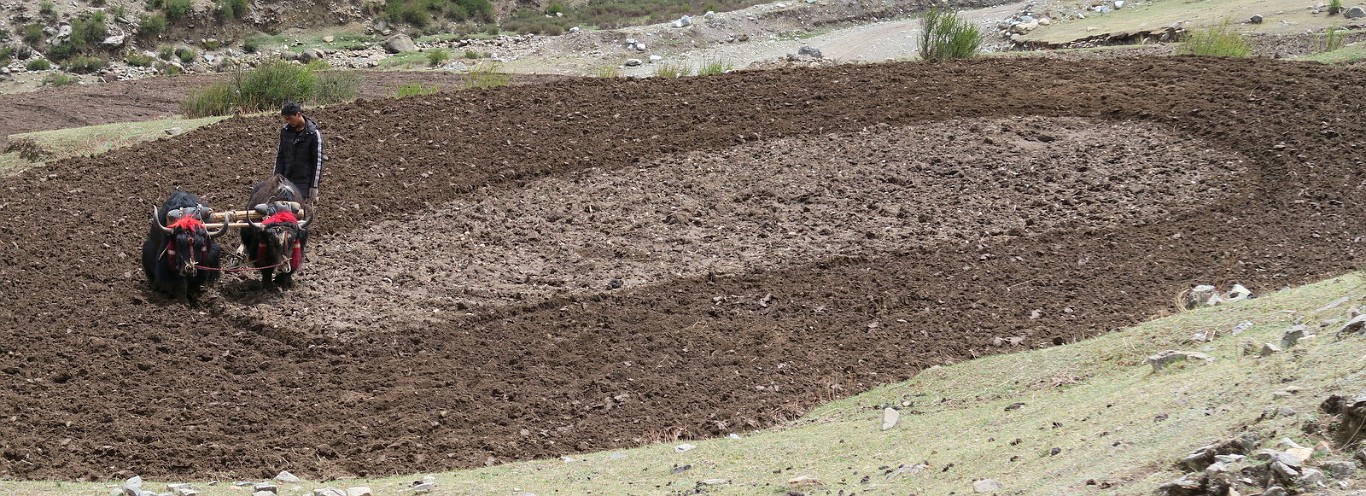 44 Plowing the Fields Tibetan farmer, plowing his tiny patch of land in the traditional way, using two yaks to pull the plow. Even in the remote areas of Tibet, this becomes more and more seldom, as tractors become more common, leading to a drastic decrease of the Yak population. |
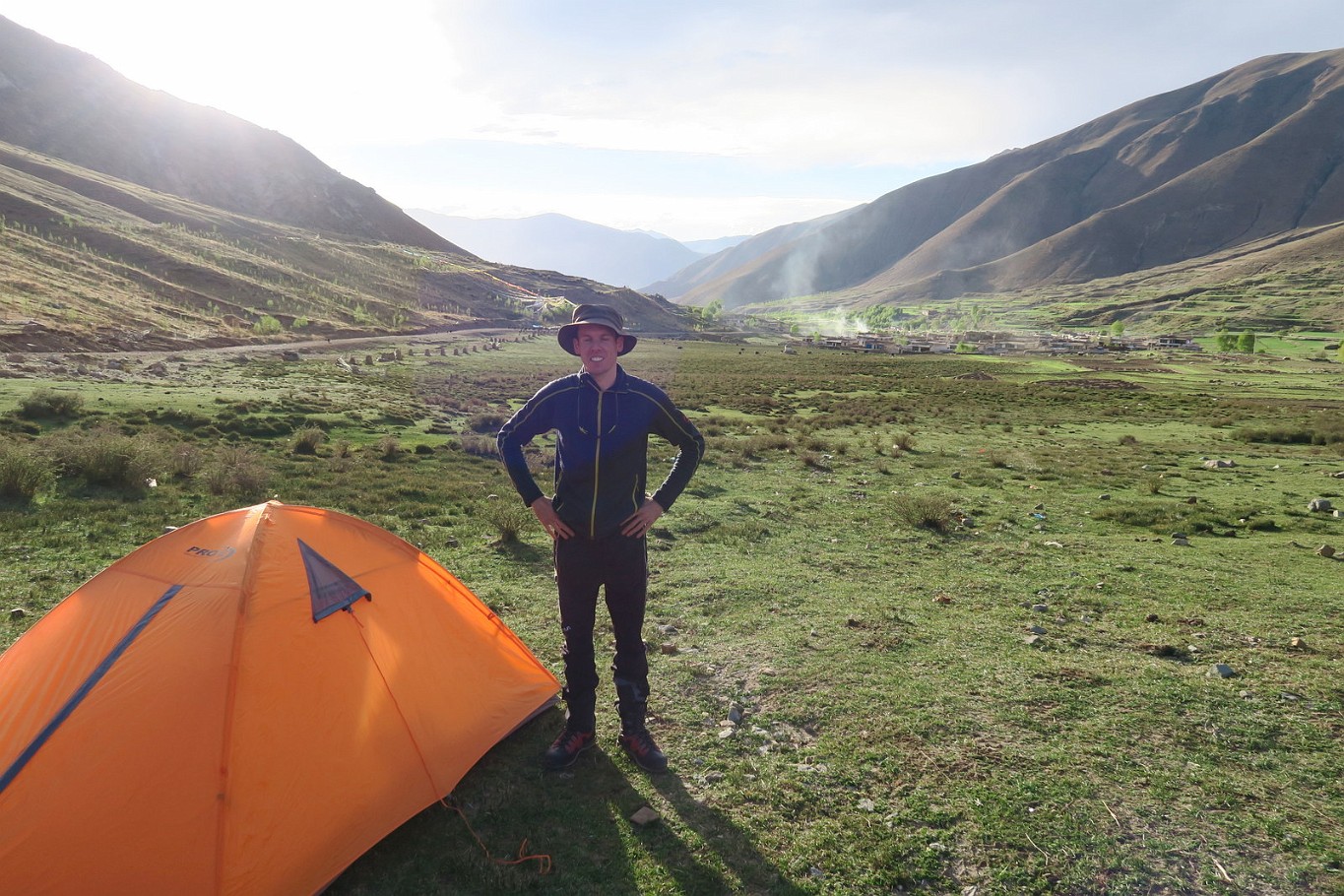 45 Before the Hike Peter and I planned to do the hike from Gamden to Samye Monastery - an attempt which totally failed due to bad organisation by our tour operator. Here, on the day before the first trekking day - things still looked quite promising... |
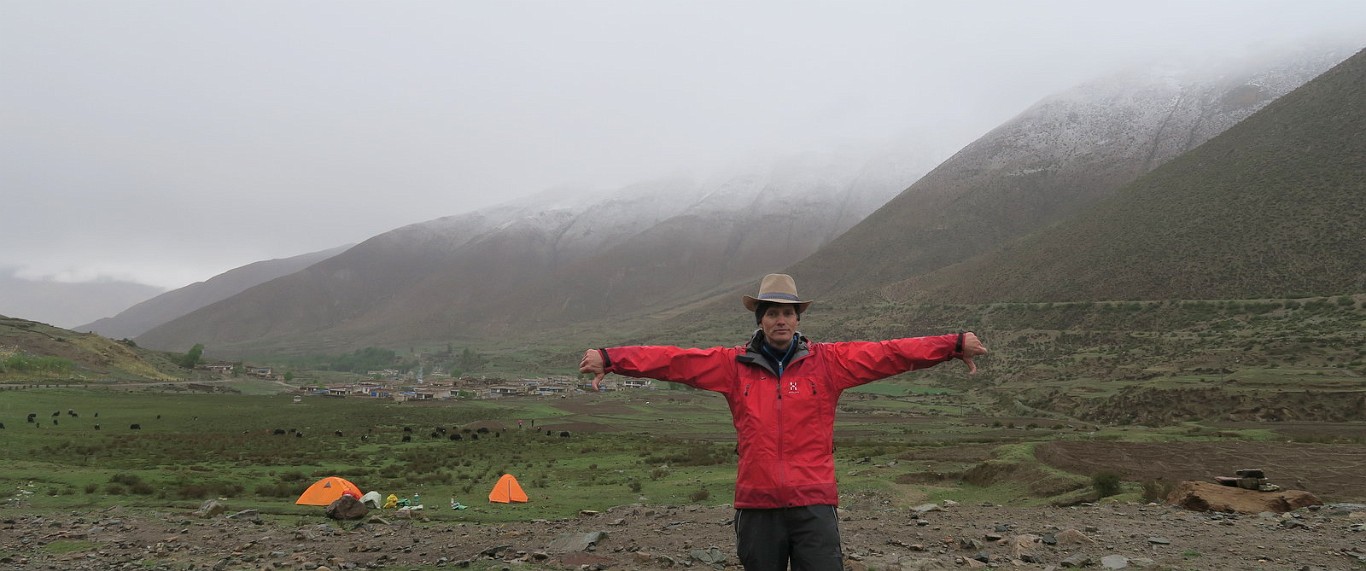 46 First Trekking Day The start into the first trekking day was a mess - it started to rain in the night and did not stop until noon, snowing down to lower altitudes (lower in Tibetan terms, that is, as we where camping at an altitude of approximately 3800m). |
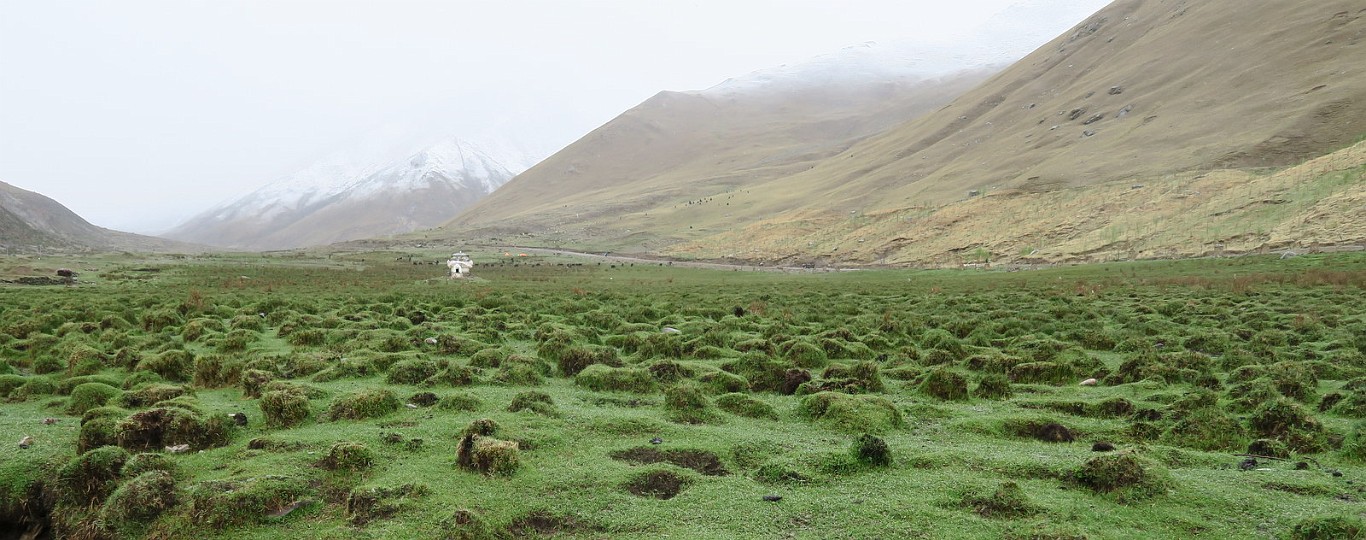 47 Untitled The grassland is typical for this area of Tibet, the grounds being furrowed by countless yaks grazing through them. In the very back, on the right hand side of the little white stupa, our orange tents can be spotted. |
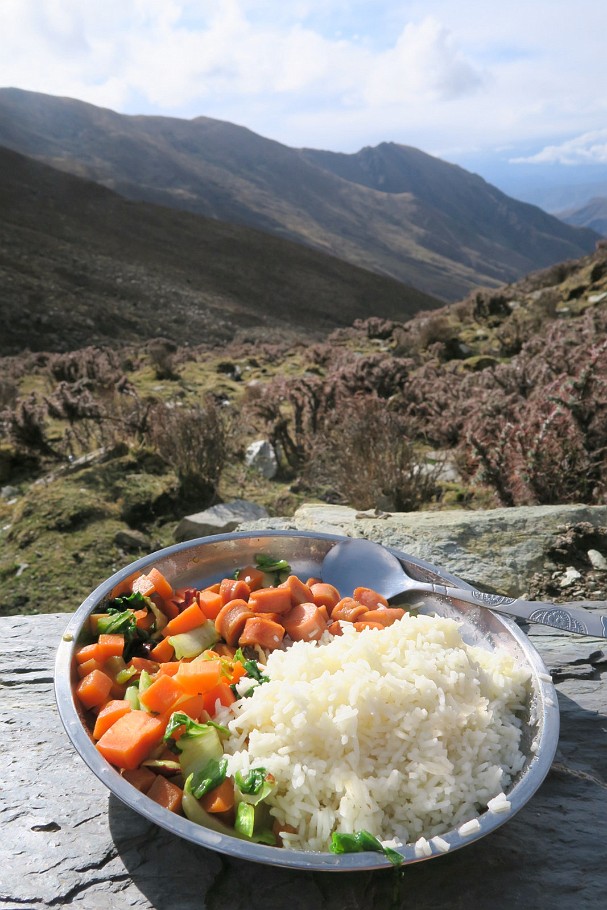 48 High Altitude Chefs The fact that our tour operator sold us the trekking tour with food excluded did not bother us too much - we created yummy dinnners ourselfs, as this photo proves (and this was on an altitude of ~4600m!) |
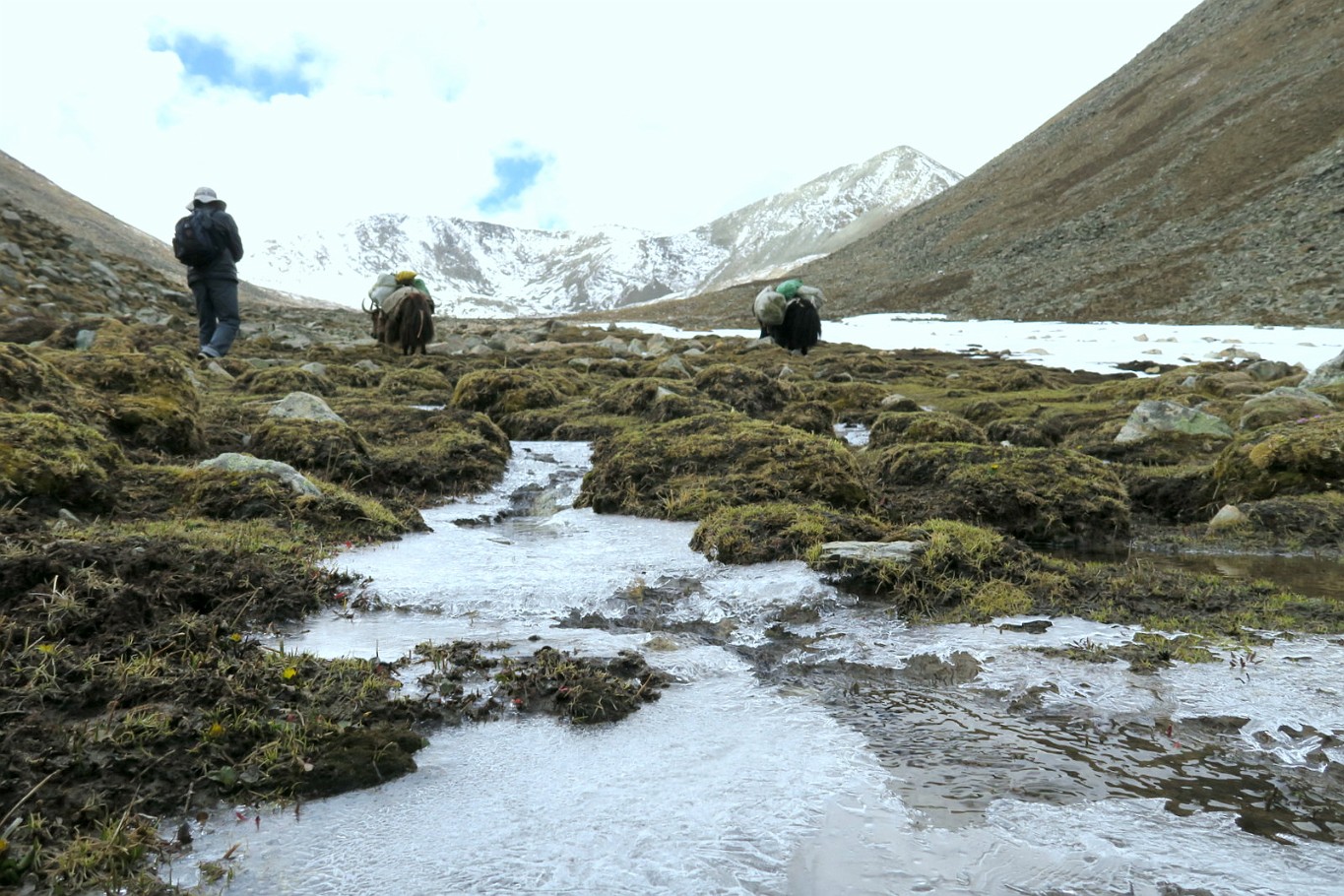 49 Second Trekking Day When he saw the rain on the first moring, our "Yak Man", the owner of the three Yaks we had to rent to carry all our equipment, informed us, that he was not willing to take us to Samye Monastery, despite the fact that the weather was continuously improving and we already had paid him for the entire trip (because he forced us to do so). Nevertheless, we were able to convince him to at least continue on the second day and walk up to the first pass (at an altitude of 5300m). |
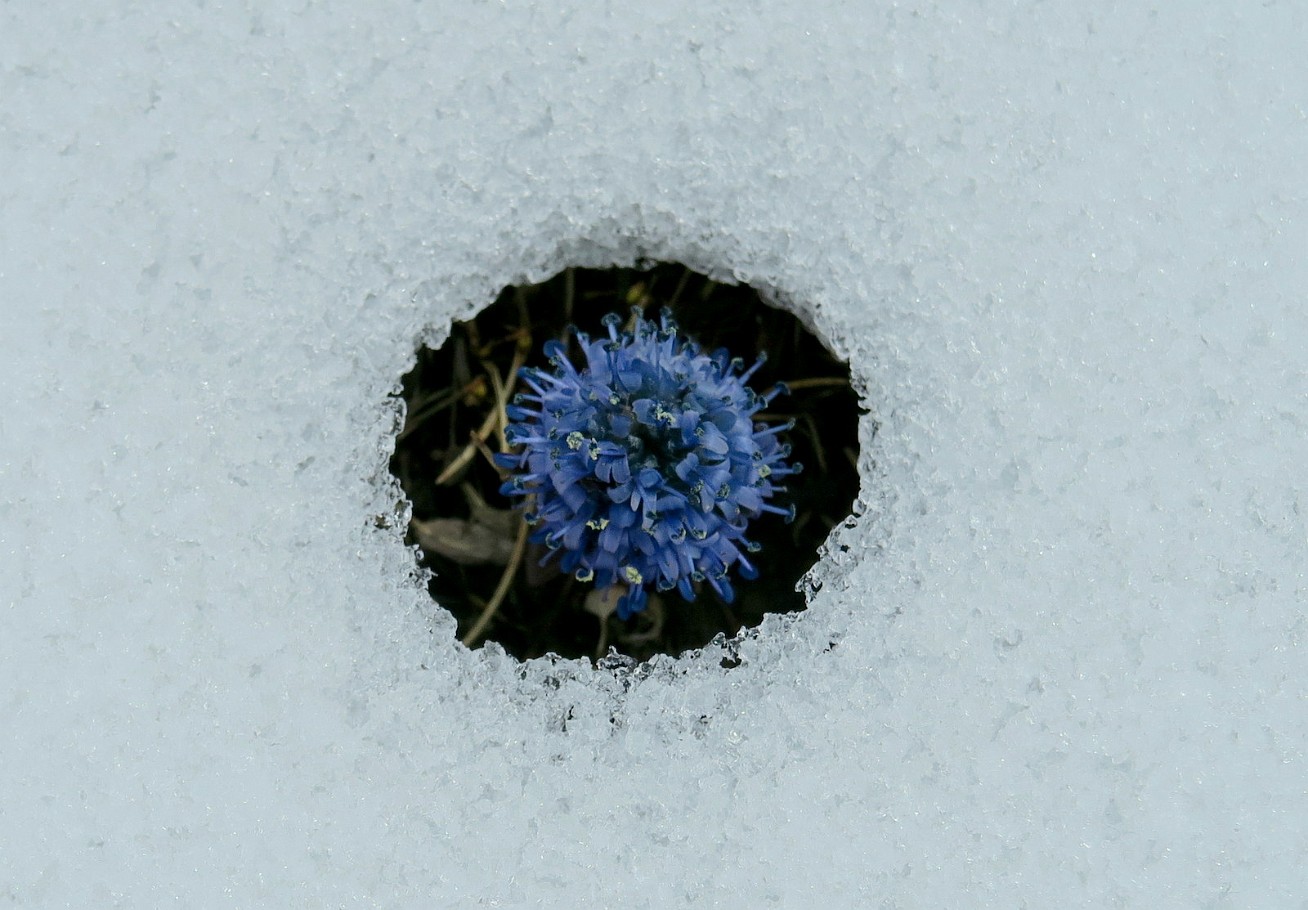 50 Force of Life Not many plants are growing at these high altitudes, but it is fascinating to see the force and will, whith which the ones, who decided to grow here, were pushing towards the sun. |
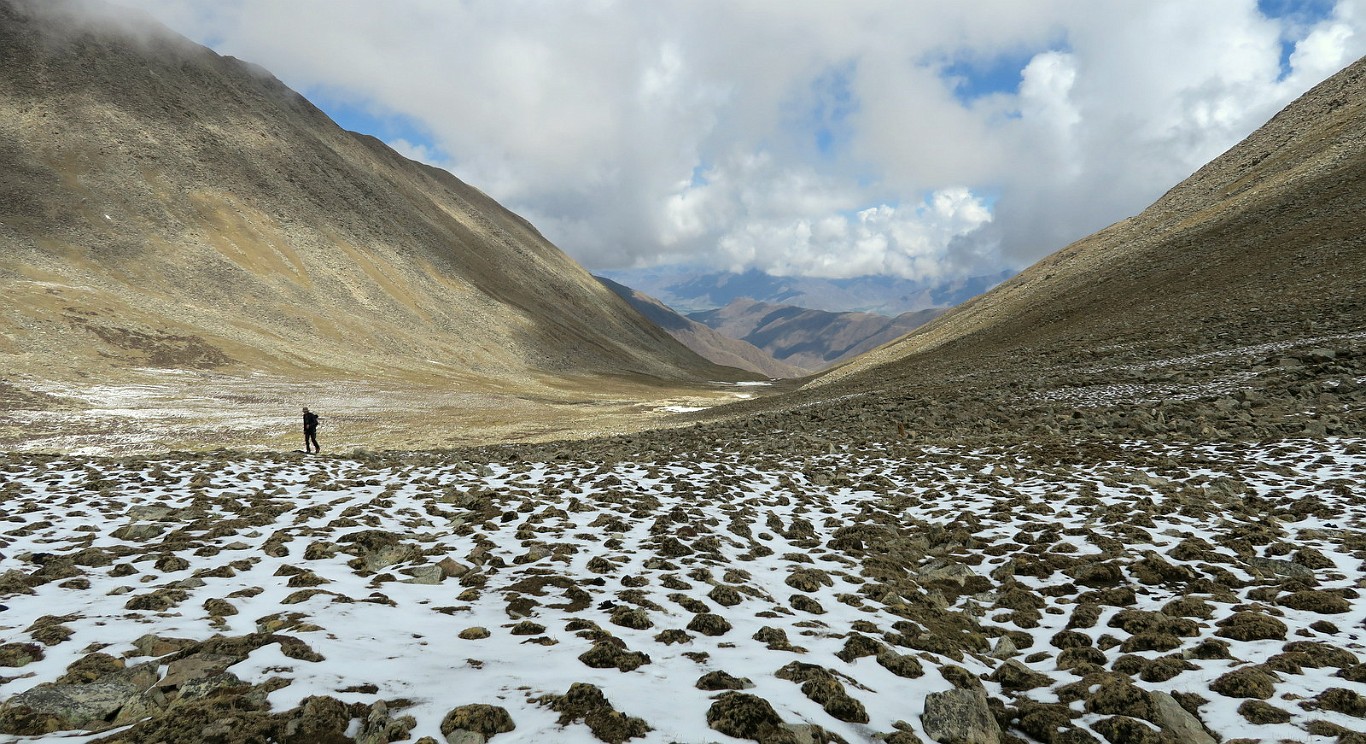 51 Approacing the First Pass |
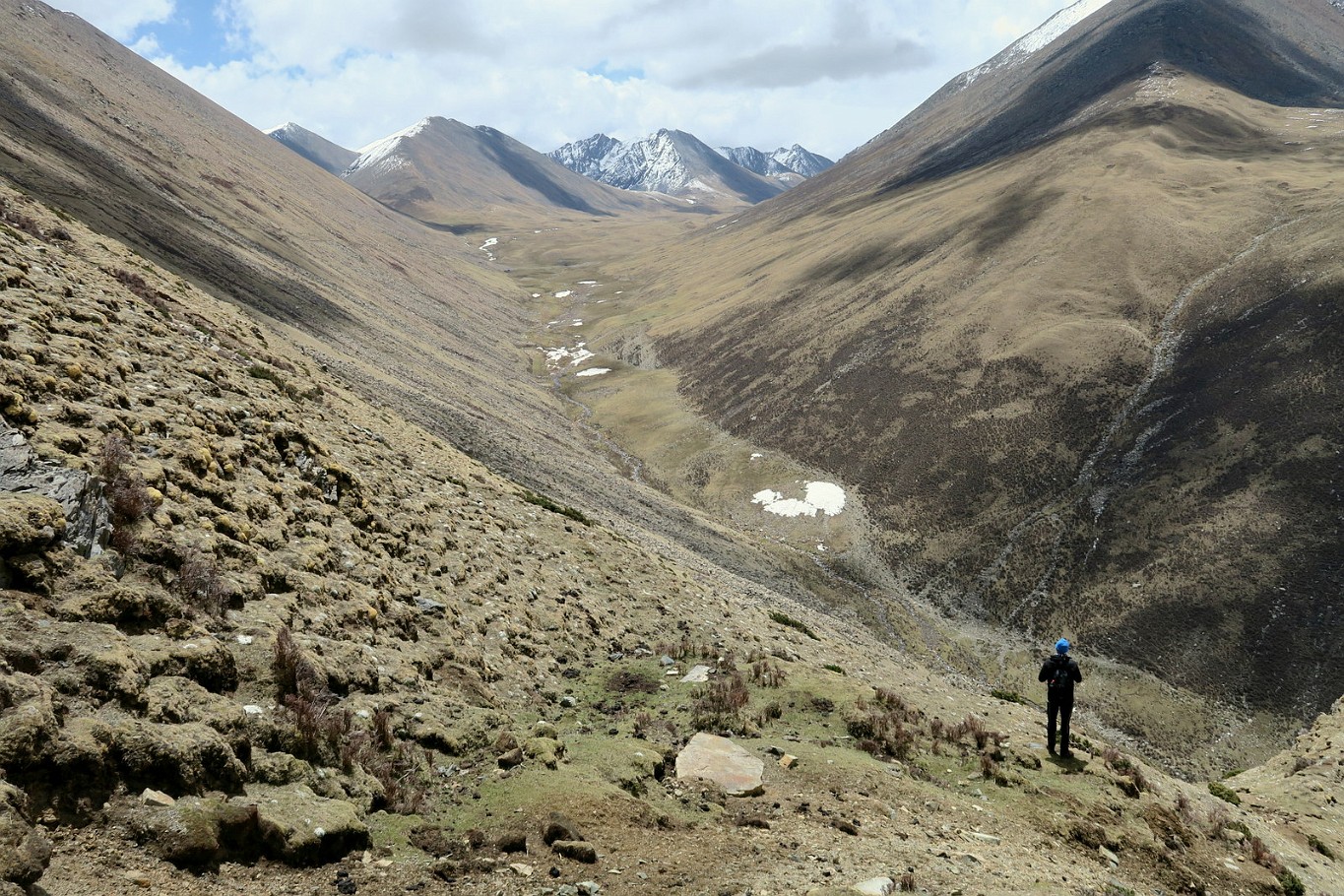 52 The Next Valley Behind the first pass, a remote and beautiful valley was unfolding. After heavy negotiation with the Yak Man whe were able to convince him to walk down into this valley and camp for another night. This was the final compromise, though. Next day (day three) he would walk back to his village with the money for six days of trekking in his pocket :-( |
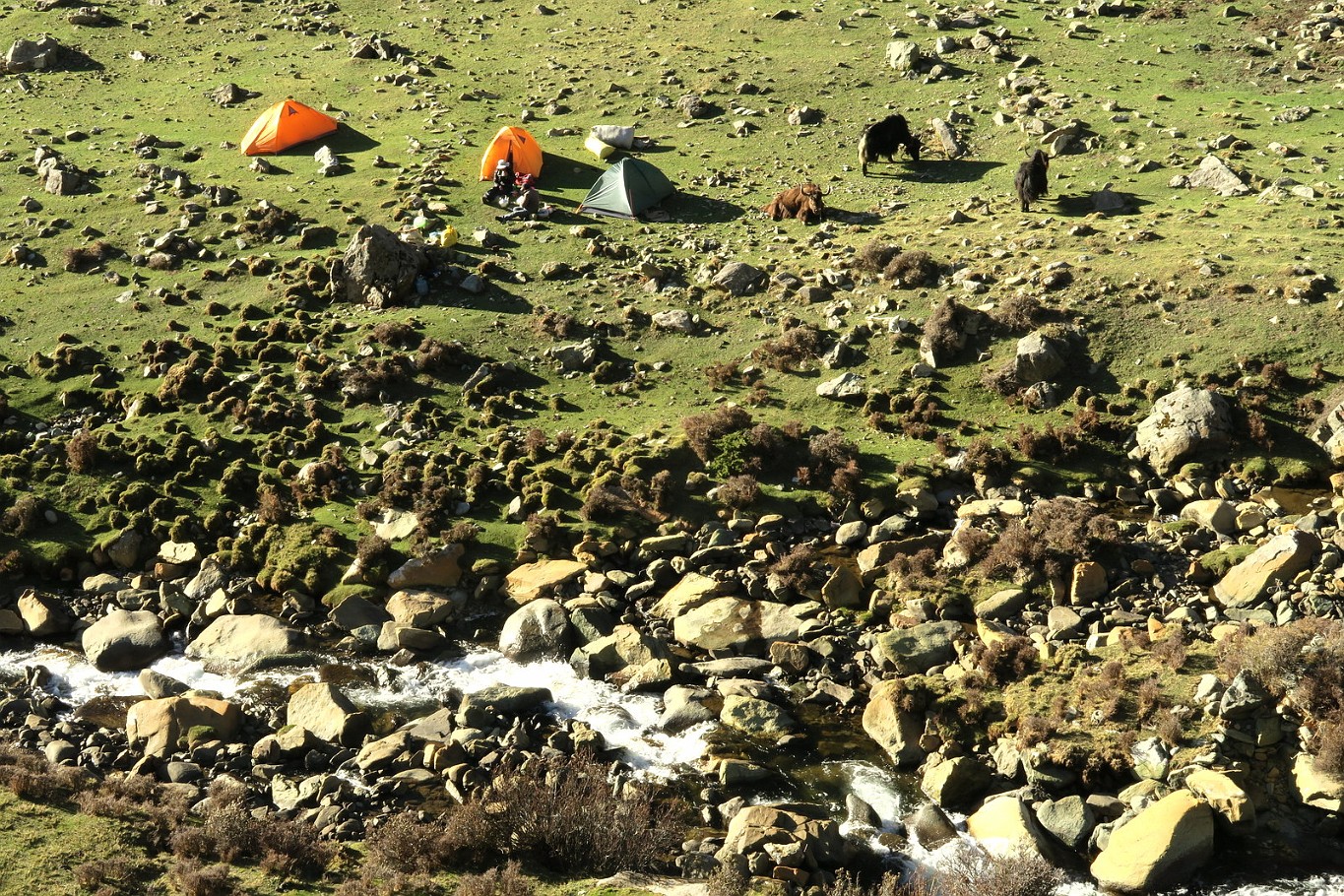 53 Campsite Our campsite - with our tents, our guide, our yaks and the river... basically all you need. Some warm sleeping bags would have been appreciated, too, but sleeping in full clothing, including down jacket and rain trousers was almost just as good :-) |
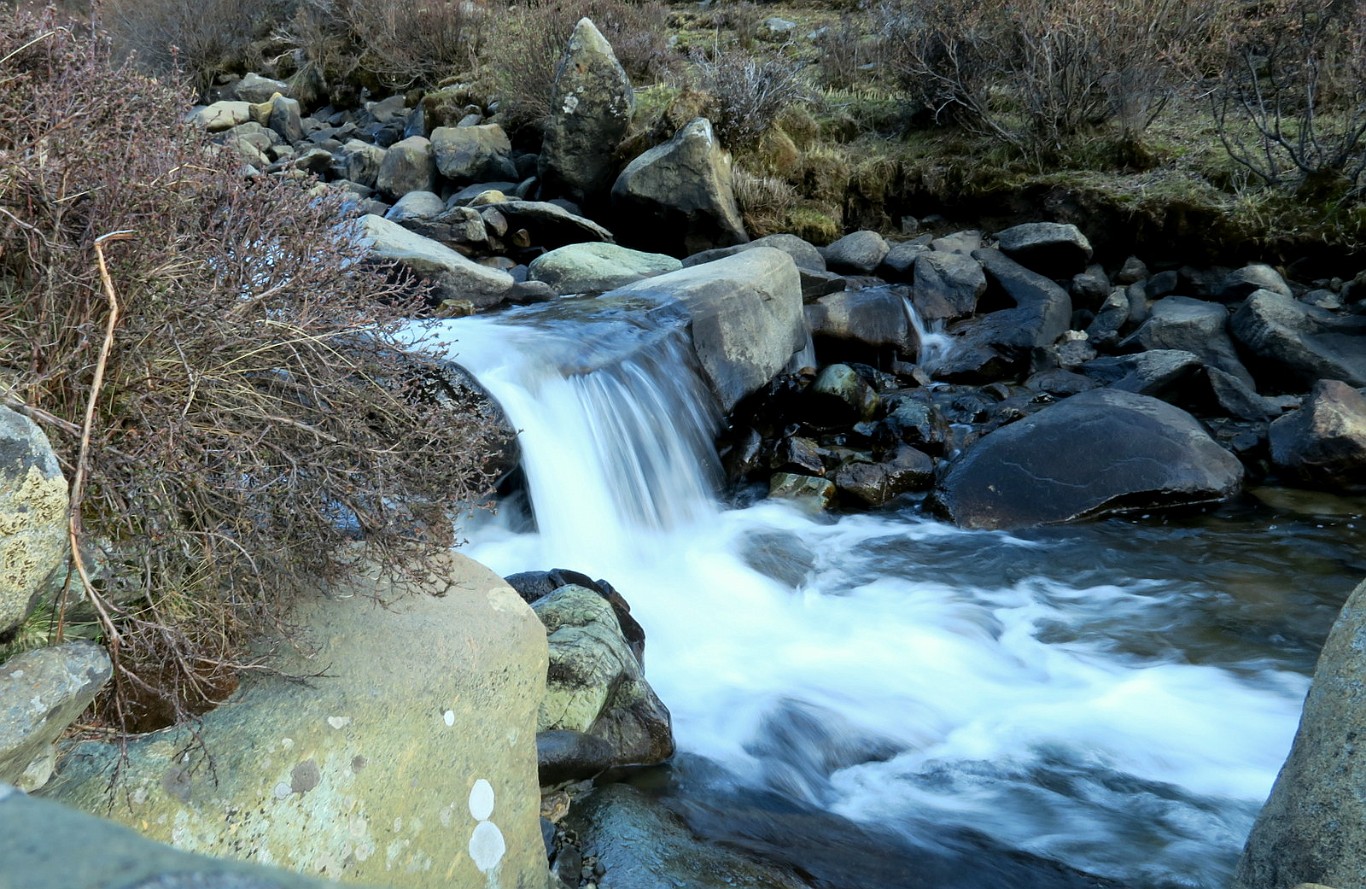 54 Soft Water Ok, every photographer takes this picture once in his carreer. So this is my moment :-) |
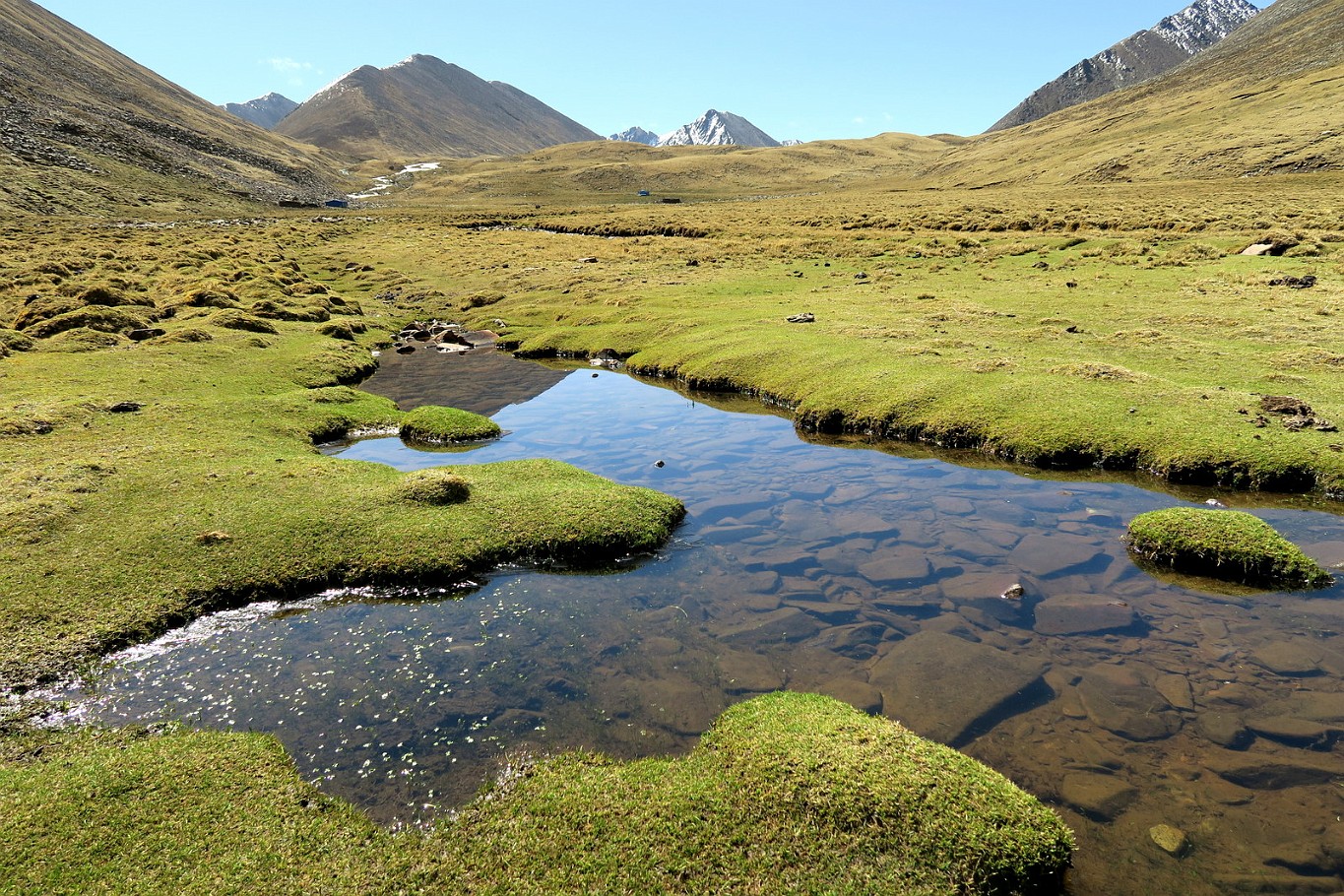 55 Third Trekking Day While the Yak Man was on his way back, we did a day trek up the valley, which provided beautiful scenery... |
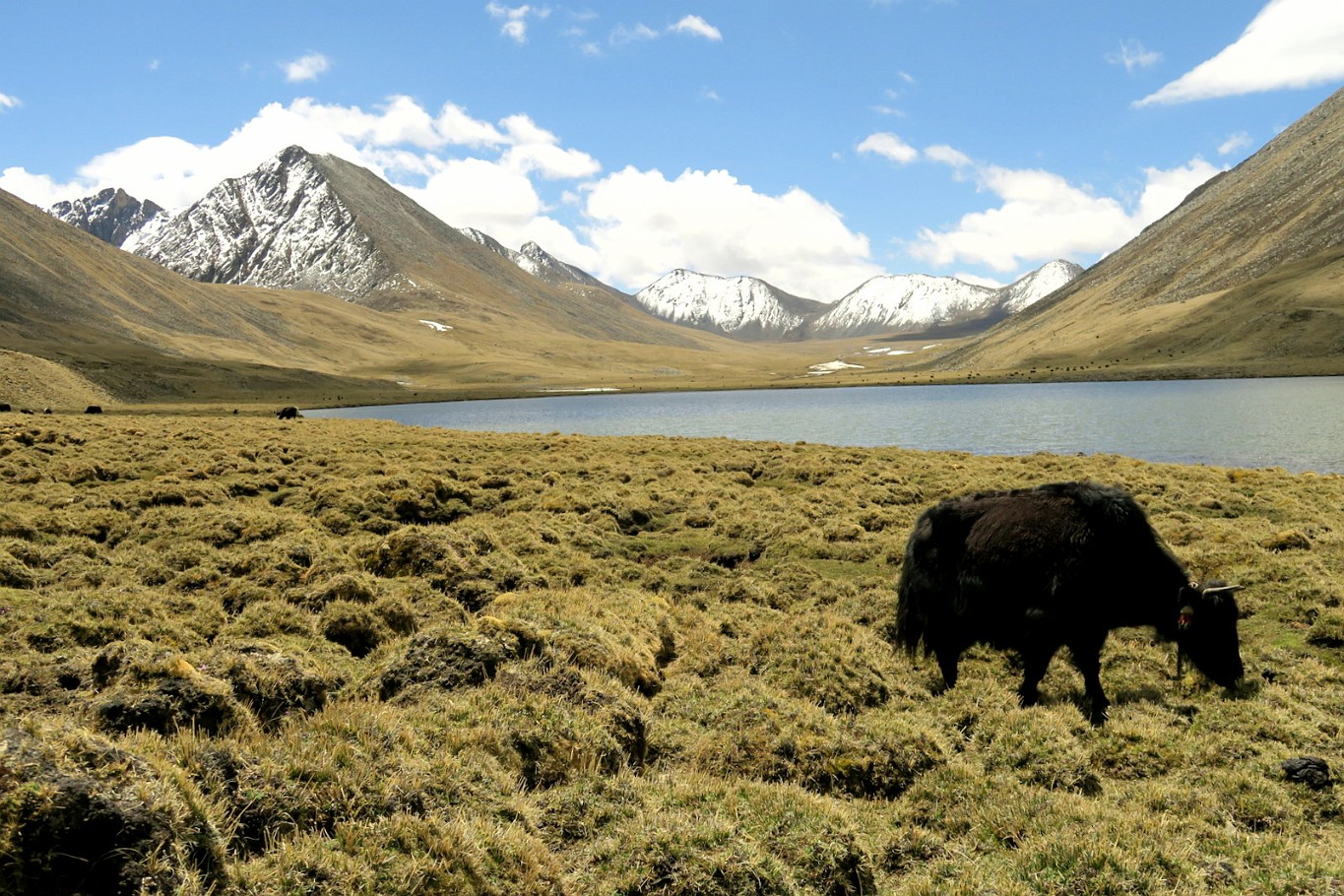 56 Mountain Lake Up in the valley, there was a small altiplano whith this mountain lake, surroundid by grazing yaks. An idyllic place! |
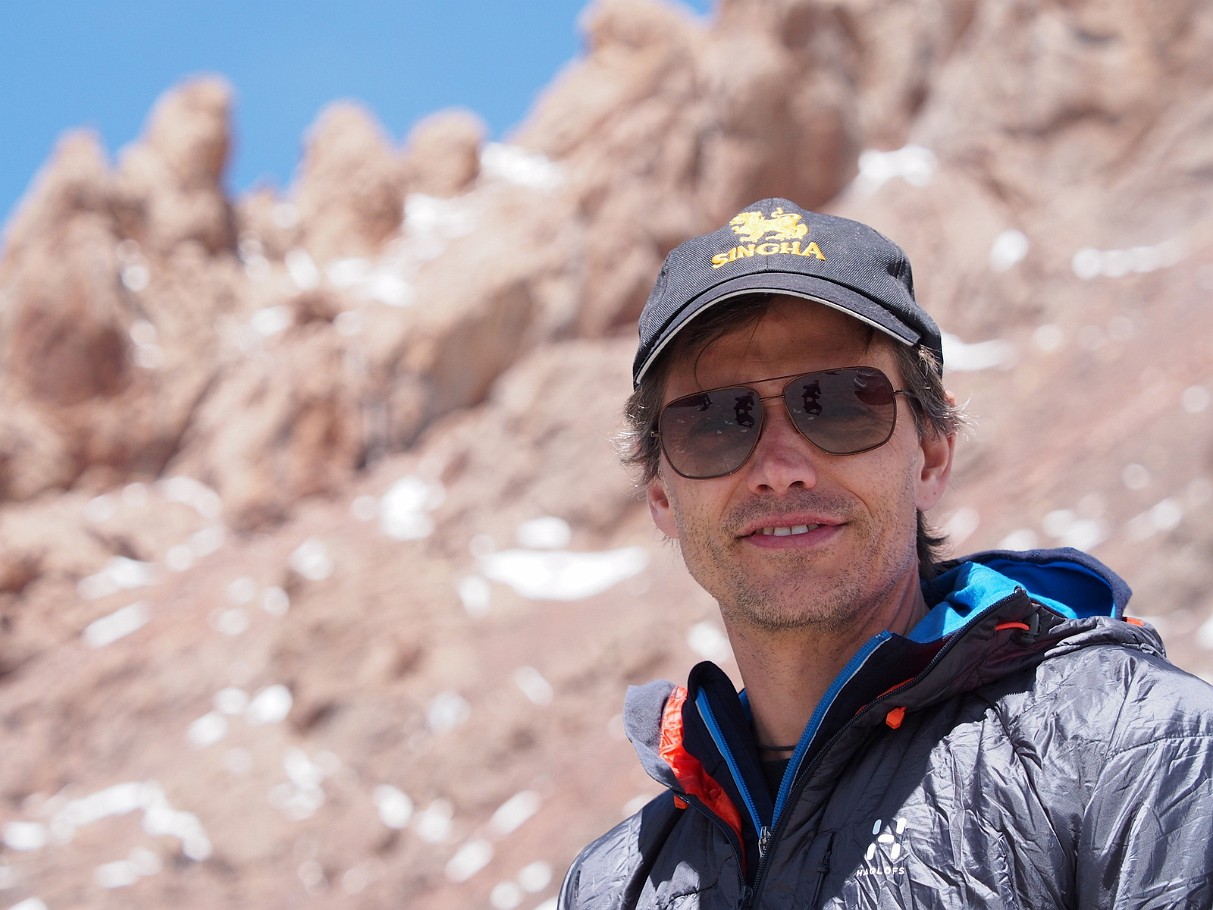 57 Still Smiling Despite the disappointment of the messed up Gamden to Samye trek, I'm still smiling and looking forward to the next stage of the trip: the silk road! |